

Here’s a sobering statistic: 75% of people never scroll past the first page of Google. For accounting firms, this means if you’re not ranking, you’re invisible to potential clients.
The accounting industry has always been competitive, but the battlefield has shifted. Word-of-mouth and referrals still matter, but they’re no longer enough. When business owners need tax help, bookkeeping, or advisory services, they don’t wait for a recommendation. They pull out their phones and search.
This guide isn’t a collection of random SEO tips. It’s a strategic framework built specifically for accounting firms, combining proven traditional SEO with the emerging opportunity of AI search optimization. Whether you’re a solo CPA or managing a multi-partner firm, you’ll learn how to build an SEO strategy that generates qualified leads month after month.
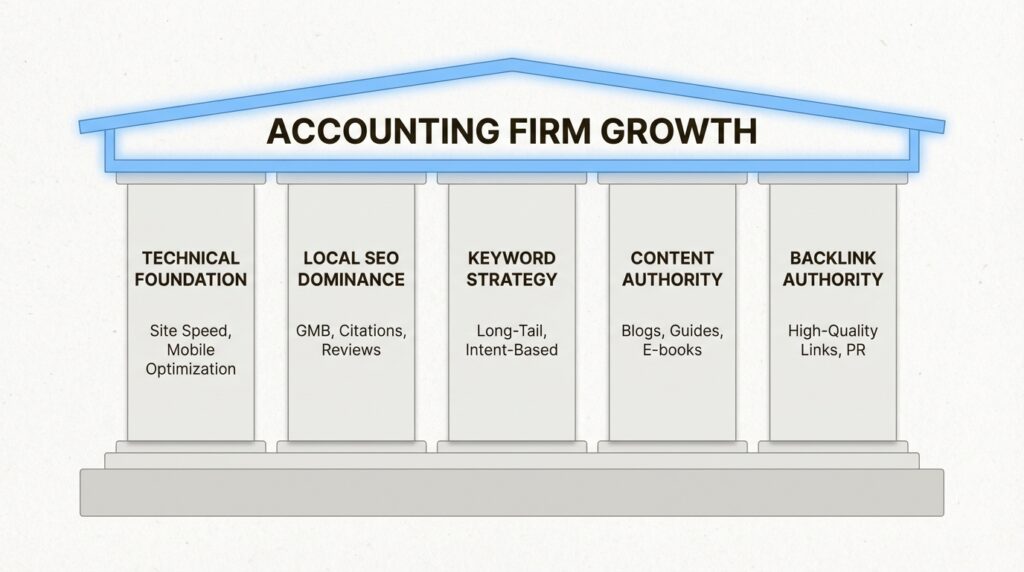
The 5-pillar SEO framework for accountants
After analyzing what works for accounting firms, we’ve identified five core pillars that drive sustainable SEO success. Skip any of these, and your foundation cracks.
Pillar 1: Technical foundation
Before you create content or build links, your website needs to work properly. Search engines can’t rank what they can’t crawl, and users won’t stay on sites that frustrate them.
The non-negotiable technical elements:
- Site speed: Google uses Core Web Vitals as ranking factors. Slow sites lose rankings and visitors.
- Mobile optimization: Over 60% of local searches happen on mobile devices. Your site must work flawlessly on phones.
- SSL certificates: HTTPS is a trust signal for both users and search engines.
- Clean URL structure: Descriptive URLs like
/services/tax-preparationoutperform/page?id=123. - XML sitemaps: Help search engines discover and index all your pages.
- Schema markup: Structured data helps Google understand your content and can earn rich snippets in search results.
Pillar 2: Local SEO dominance
For most accounting firms, local SEO delivers the fastest results. Here’s how to dominate:
Google Business Profile optimization
Your Google Business Profile is often the first impression potential clients get. Complete every field: business description, services, hours, photos, and attributes. Post updates regularly (weekly is ideal). Respond to all reviews, both positive and negative.
NAP consistency
Your Name, Address, and Phone number must be identical across your website, Google Business Profile, and every directory listing. Even small differences (“St.” vs “Street”) can confuse search engines.
Local citations and directories
Get listed in accounting-specific directories (AICPA, state CPA societies) and general business directories (Yelp, Yellow Pages, local chambers of commerce). Quality matters more than quantity: focus on authoritative, relevant sites.
Location-specific landing pages
If you serve multiple cities or neighborhoods, create dedicated pages for each location. Don’t just swap the city name; write unique content about your services in that specific area.
Our local SEO services are designed specifically to help accounting firms capture this local search traffic.
Pillar 3: Keyword strategy that converts
Not all keywords are created equal. The firms that win at SEO target intent-driven keywords, not just high-volume terms.
The four keyword categories that work for accountants:
- Location-based: “CPA in Dallas,” “bookkeeping services Sacramento”
- Service-specific: “tax preparation for small business,” “payroll services for restaurants”
- Problem-aware: “how to file back taxes,” “what to do if you missed the tax deadline”
- Long-tail opportunities: “quarterly tax planning for realtors,” “accounting for e-commerce businesses”
Why generic terms are traps
Chasing keywords like “accountant” or “CPA” is usually a mistake for smaller firms. These terms are dominated by national firms, directories, and major platforms. You’ll burn time and budget competing for scraps. Instead, target specific, lower-competition terms where you can actually win.
Your client FAQs are keyword goldmines
The questions clients ask during intake calls and consultations? Those are the exact phrases prospects type into Google. Document these questions and create content that answers them comprehensively.
Pillar 4: Content that builds authority
Google’s E-E-A-T guidelines (Experience, Expertise, Authoritativeness, Trustworthiness) are especially important for accounting content. You’re dealing with people’s finances. Trust is everything.
Content types that perform well for accountants:
- Tax deadline reminders and checklists: Practical, timely, highly shareable
- Industry-specific guides: “Tax tips for freelancers,” “Accounting for construction companies”
- Case studies: Anonymized client success stories that demonstrate expertise
- FAQ pages: Comprehensive answers to common questions
- Regulatory updates: Timely analysis of tax law changes
The duplicate content warning
Many accounting firms buy pre-written articles from content libraries. This is a mistake. Search engines penalize duplicate content, and generic articles don’t build trust. Every piece of content on your site should be original, specific, and genuinely helpful.
Pillar 5: Authority through backlinks
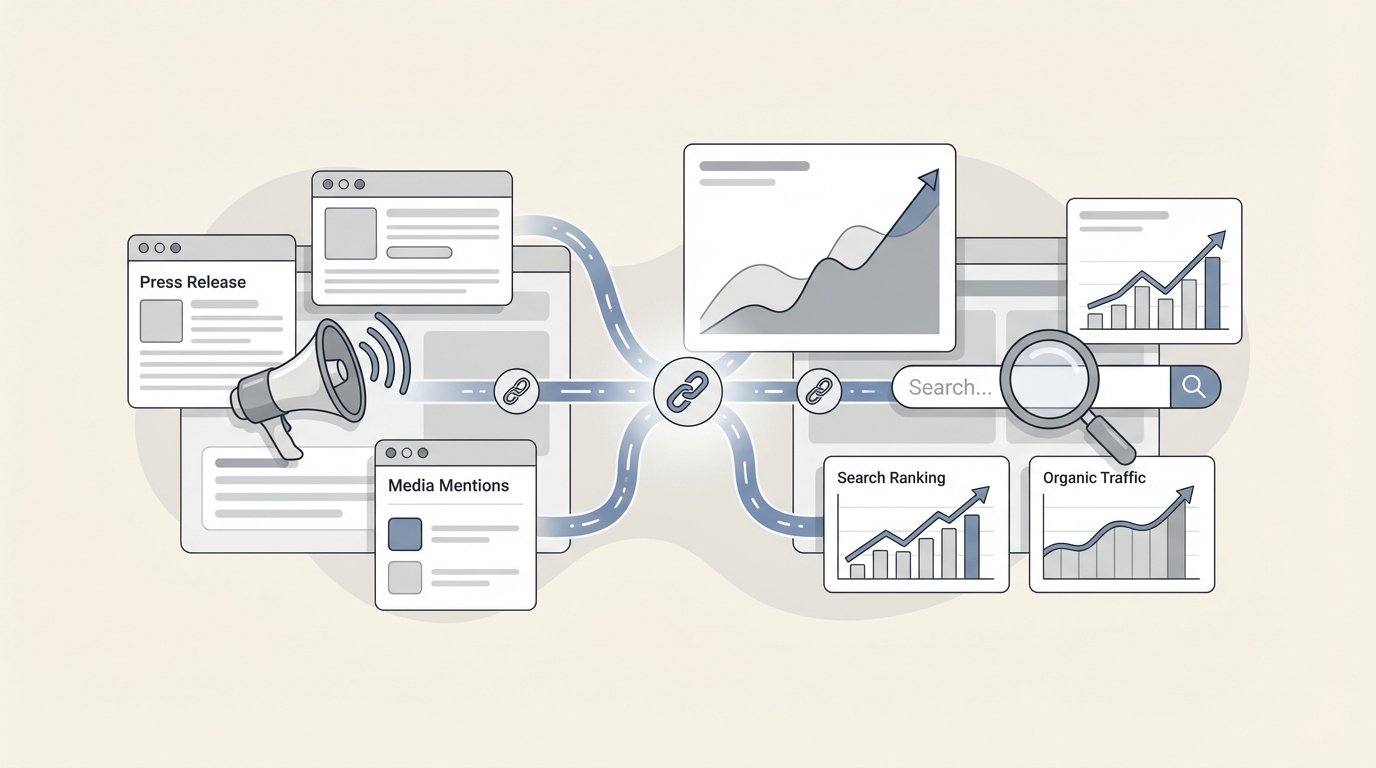
Backlinks (links from other websites to yours) remain one of Google’s top ranking factors. But quality trumps quantity every time.
Link building opportunities for accounting firms:
- Professional associations: AICPA, state CPA societies, industry groups
- Local business directories: Chamber of commerce, local business associations
- Guest posting: Write for business blogs, industry publications, local news sites
- Local sponsorships: Sponsor community events, charities, or sports teams
- Partnerships: Cross-promote with complementary businesses (law firms, financial advisors)
The key question to ask: “Would I want this link even if search engines didn’t exist?” If the answer is no, it’s probably not worth pursuing.
Common SEO mistakes accountants make
After working with dozens of accounting firms, we’ve seen the same mistakes repeatedly. Avoid these, and you’re already ahead of most competitors.
Technical missteps
- Slow, outdated websites: If your site loads like it’s 2010, you’re losing rankings and visitors
- Missing schema markup: Local business schema helps you appear in map results and rich snippets
- Poor mobile experience: Pinch-to-zoom websites are conversion killers
- Broken links and 404 errors: Signal neglect to both users and search engines
Content errors
- Buying generic content: Article library content hurts more than it helps
- Thin service pages: A paragraph about “tax services” won’t rank for anything
- Ignoring search intent: Writing what you want to say instead of what clients search for
- Keyword stuffing: Forcing keywords unnaturally reads poorly and triggers penalties
Strategic failures
- No keyword research: Creating content without understanding what people actually search for
- Competing nationally first: Trying to rank for “tax accountant” before dominating your city
- Not tracking performance: Flying blind without Google Search Console and Analytics
- Giving up too soon: Expecting results in 30 days and abandoning SEO when they don’t come
If you’re making these mistakes, our technical SEO services can help you identify and fix the issues holding your site back.
The AI search opportunity for accountants
Here’s something your competitors probably aren’t thinking about yet: AI search optimization.
What is AI search optimization (GEO/AEO)?
When someone asks ChatGPT, Perplexity, or Claude for accounting recommendations, which firms get mentioned? That’s the new frontier of search visibility.
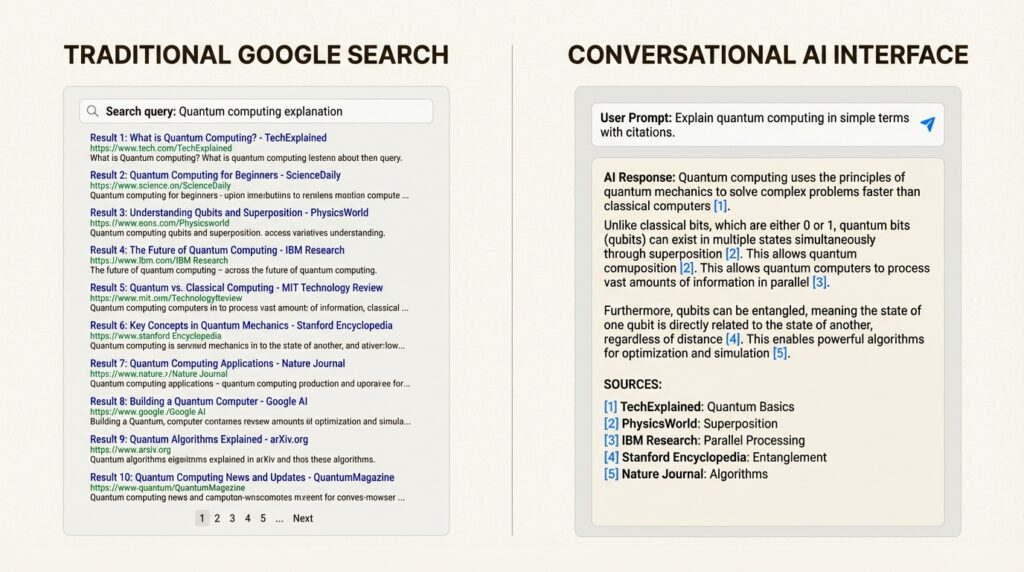
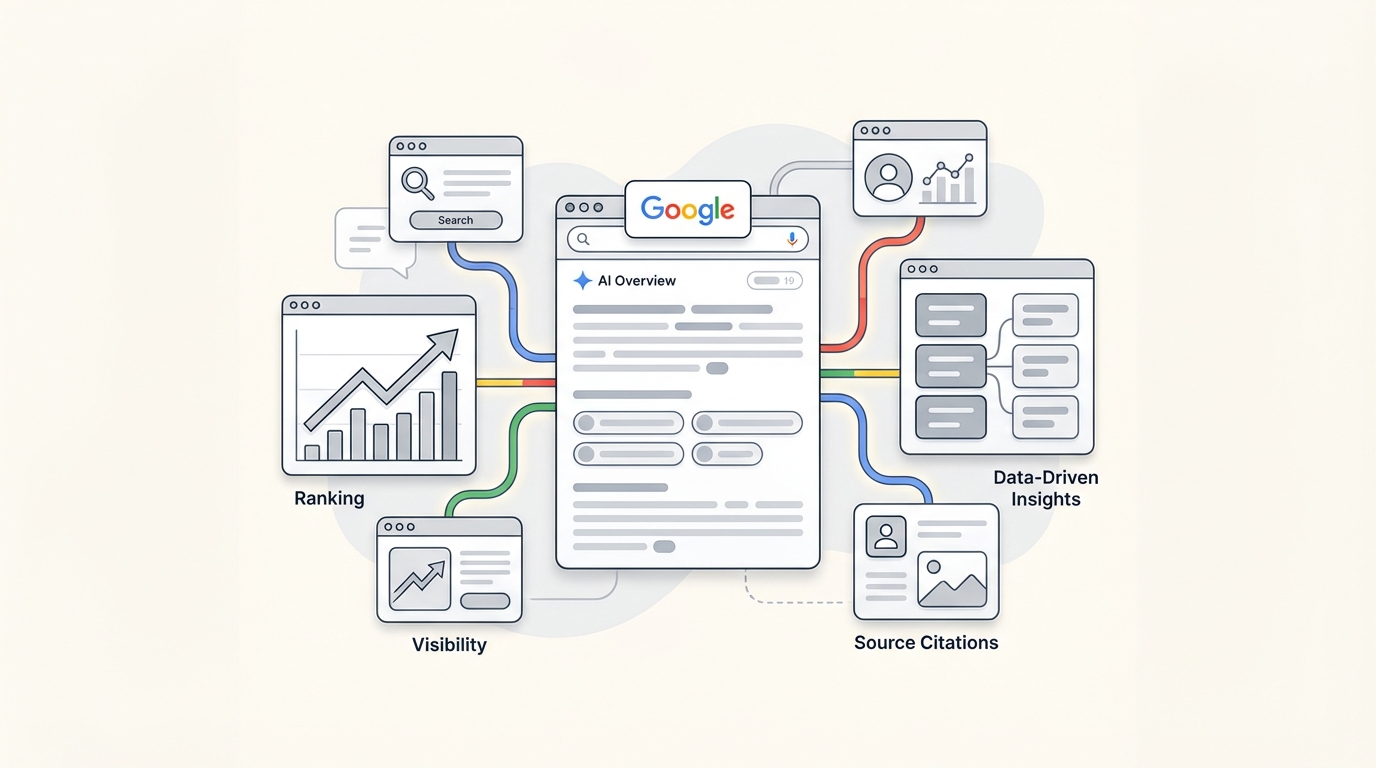
Unlike traditional SEO, where you optimize to rank on Google, AI search optimization (also called Generative Engine Optimization or Answer Engine Optimization) focuses on being cited by large language models when they answer user questions.
How AI search differs from Google SEO
Google shows a list of links. AI search engines synthesize answers from multiple sources and present a direct response. If a prospect asks ChatGPT “What’s the best accounting firm for small businesses in Chicago?” they get a curated recommendation, not a list of ten blue links.
How to optimize for AI search
Structured data and entity clarity
LLMs need to understand who you are, what you do, and why you’re credible. Clear entity definitions, consistent NAP data, and comprehensive “About” pages help AI systems categorize you correctly.
Comprehensive, authoritative content
AI systems cite sources that thoroughly answer user questions. Surface-level content gets ignored. In-depth guides, original research, and expert analysis get referenced.
Topical authority in specific niches
Instead of being a generalist, establish deep expertise in specific areas (e.g., “tax planning for healthcare professionals”). AI systems prefer citing specialists over generalists.
Mentions across the web
AI training data includes more than just your website. Being mentioned in industry publications, directories, and reputable sources increases your likelihood of being cited.
Why this matters now
AI search usage is growing exponentially. Early adopters who optimize for AI visibility now will dominate recommendations as usage scales. The competition is still light compared to traditional Google SEO.
At Decoding, we specialize in helping firms navigate this shift. Our guide to AI search optimization covers the fundamentals, and our post on how to get cited by LLMs dives deeper into the tactics.
Building your accounting firm’s SEO roadmap
SEO isn’t a one-time project. It’s an ongoing investment that compounds over time. Here’s a practical roadmap to guide your efforts.
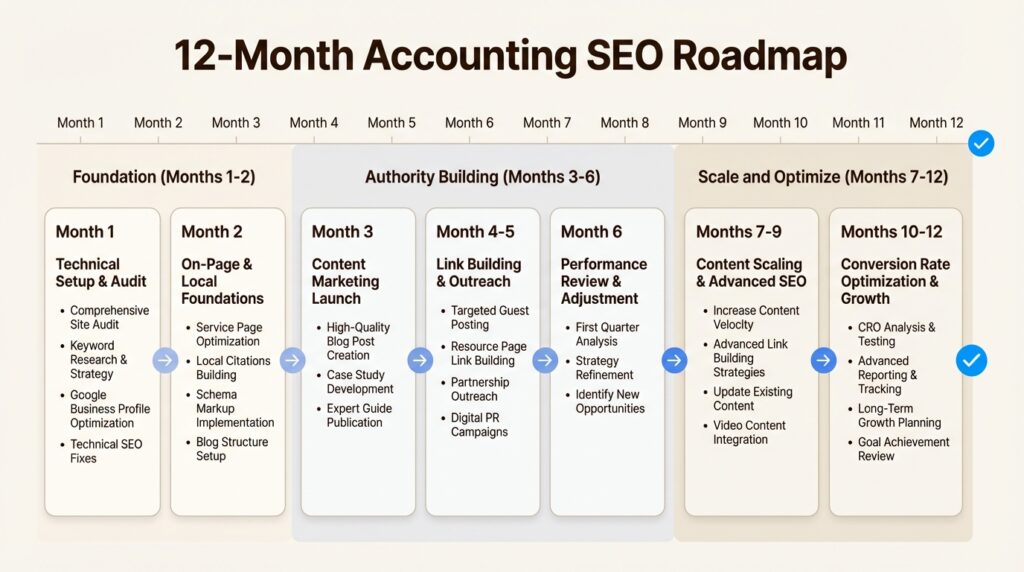
Phase 1: Foundation (Months 1-2)
Technical audit and fixes
Run a comprehensive technical audit to identify issues. Fix site speed problems, mobile issues, broken links, and crawl errors. Ensure your site is indexable and properly structured.
Google Business Profile setup
If you haven’t already, claim and fully optimize your Google Business Profile. If you have one, audit it for completeness and accuracy.
Keyword research and competitor analysis
Identify the keywords your competitors rank for that you’re missing. Find quick-win opportunities: keywords with decent volume and low competition.
Quick-win content
Create or optimize content for your core service pages and location pages. These are your money pages, they should be perfect.
Phase 2: Authority building (Months 3-6)
Content calendar execution
Publish consistently. Aim for 2-4 high-quality pieces per month. Focus on answering client questions and addressing search intent.
Local citation building
Get listed in relevant directories. Ensure NAP consistency across all listings.
Initial link building
Start with easy wins: professional associations, local directories, partner websites. Then move to guest posting and PR outreach.
Review generation
Implement a system to request reviews from satisfied clients. Respond to every review promptly.
Phase 3: Scale and optimize (Months 6-12)
Expand to adjacent keywords
Once you’ve established rankings for core terms, expand into related topics. If you rank for “tax preparation,” target “tax planning,” “tax strategy,” and industry-specific tax topics.
Conversion rate optimization
Traffic without conversions is vanity. Test different calls-to-action, form placements, and page layouts to maximize lead generation.
Advanced content
Create comprehensive guides, tools, and resources that earn links naturally. Original research and data perform exceptionally well.
AI search optimization
Begin optimizing for LLM visibility. Update content to be more comprehensive, add structured data, and build broader topical authority.
Timeline expectations
It’s important to be realistic about timelines:
- Initial ranking improvements: 30-60 days for local terms, longer for competitive keywords
- Qualified leads from organic: 3-6 months with consistent effort
- Significant traffic growth: 6-12 months of sustained investment
SEO is a long game, but the firms that start now will dominate local search for years to come.
Our content strategy services can help you develop and execute a content calendar that drives results.
When to hire an SEO partner vs. DIY
Should you handle SEO in-house or hire an agency? The answer depends on your situation.
DIY makes sense if:
- You have marketing staff with SEO experience
- Your firm is small and local competition is light
- You have time to learn and execute consistently
- You enjoy marketing and can dedicate 5-10 hours per week
Hire a partner when:
- You’re in a competitive market (major metro areas)
- You need results faster than DIY allows
- Technical SEO is beyond your team’s expertise
- You want to focus on accounting, not marketing
- You’ve tried DIY and aren’t seeing results
What to look for in an accounting SEO agency
Not all SEO agencies understand the accounting industry. Here’s what matters:
- Industry-specific experience: Do they understand accounting terminology, client concerns, and compliance requirements?
- Transparent reporting: You should see exactly what work is being done and what results it’s generating
- Custom strategy: Avoid cookie-cutter packages. Your firm is unique, your SEO strategy should be too
- Focus on leads and revenue: Rankings are nice, but qualified leads and new clients are what matter
At Decoding, we specialize in SEO for professional services firms. We don’t do templates. Every strategy is custom-built based on your firm’s goals, market, and competitive landscape. If you’re ready to discuss how we can help your accounting firm dominate search, contact us.
Start dominating search results for your accounting firm
SEO isn’t magic. It’s a systematic process of building authority, creating valuable content, and earning trust from both search engines and potential clients.
The firms that invest in SEO now are building assets that will generate leads for years. The firms that wait will find the competition only gets steeper.
The AI search revolution adds a new dimension. Not only can you rank on Google, but you can become the firm that AI systems recommend when prospects ask for accounting help.
The framework is clear: technical foundation, local dominance, strategic keywords, authoritative content, quality backlinks. Execute consistently on these five pillars, and your firm will rise in the rankings.
Ready to see where your firm stands? Start with our AI visibility audit to understand your current position and identify the highest-impact opportunities for growth.
Frequently Asked Questions
How long does it take to see results from SEO for accountants and accounting firms?
Most accounting firms see initial ranking improvements within 30-60 days, particularly for local keywords. Qualified leads typically start coming in after 3-6 months of consistent effort. Significant traffic growth and dominant rankings usually take 6-12 months. SEO is a long-term investment, but the compounding returns make it worth the wait.
Should accounting firms focus on local SEO or national SEO first?
Start with local SEO. Most accounting clients want local expertise and prefer working with firms in their area. Local keywords are less competitive, faster to rank for, and deliver higher-quality leads. Once you dominate your local market, you can expand to regional or national targeting if it makes sense for your business model.
What makes SEO for accountants and accounting firms different from other industries?
Accounting SEO requires understanding high-intent, research-heavy buyer behavior. Clients aren’t impulse buyers, they research extensively before choosing an accountant. Trust signals matter enormously because you’re handling sensitive financial information. Additionally, regulatory compliance and professional certifications (CPA, EA) play a role in content strategy and trust building.
How much should accounting firms budget for SEO?
DIY SEO requires time investment (5-10 hours weekly) plus tool costs ($100-300/month for SEO software). Professional SEO services for accounting firms typically range from $1,500-$5,000+ monthly depending on market competitiveness and scope. Compare this to PPC, where cost-per-enquiry often exceeds $120-200, and SEO becomes cost-effective over time.
Can AI tools like ChatGPT help with SEO for accountants and accounting firms?
AI tools can assist with keyword research, content ideation, and competitive analysis, but they shouldn’t replace human expertise. Generic AI-generated content won’t rank well or build trust with potential clients. The best approach uses AI for research and optimization while maintaining human oversight for accuracy, tone, and strategic direction. AI is especially useful for identifying content gaps and optimizing for AI search engines.
What are the biggest mistakes accounting firms make with SEO?
The most common mistakes include: buying generic content from article libraries (duplicate content penalties), ignoring local SEO in favor of competitive national keywords, neglecting technical fundamentals like site speed and mobile optimization, not tracking performance with Google Search Console, and giving up too early when results don’t appear immediately. Another major mistake is failing to optimize for the shift toward AI search visibility.
How does AI search optimization fit into SEO for accountants and accounting firms?
AI search optimization (GEO/AEO) is becoming essential as more prospects use ChatGPT, Perplexity, and Claude to find accounting services. It complements traditional SEO by focusing on being cited by AI systems, not just ranking on Google. This requires comprehensive, authoritative content, clear entity definitions, and building topical authority in specific niches. Firms that optimize for both traditional and AI search will have a significant advantage.







Leave a Reply