

Every month, approximately 230,000 people type “electrician near me” into Google. They’re looking for someone to fix a breaker, install an EV charger, or rewire their home. The question is: will they find your electrical business, or your competitor’s?
If your company isn’t showing up on the first page of search results, you’re losing jobs. It’s that simple. Most electrical contractors rely on referrals and word-of-mouth, but in 2026, that’s not enough. Your potential customers are searching online first, and if you’re not visible, you’re not in the running.
The good news? SEO for electricians isn’t rocket science. You don’t need a massive marketing budget or a dedicated team. What you need is a focused strategy that targets the specific ways homeowners and businesses search for electrical services.
At Decoding, we’ve spent 16 years helping trade businesses dominate local search. We don’t deliver 50-page reports that gather dust. We create actionable roadmaps that drive revenue. This guide breaks down exactly what works for electrical contractors in 2026, including how to optimize for the new wave of AI search.
Why SEO matters for electrical contractors
The way people find electricians has fundamentally changed. Phone books are dead. Today’s customers pull out their phones and search. According to BrightLocal’s 2024 research, 98% of consumers used the internet to find a local business, and 87% read online reviews before making a decision.
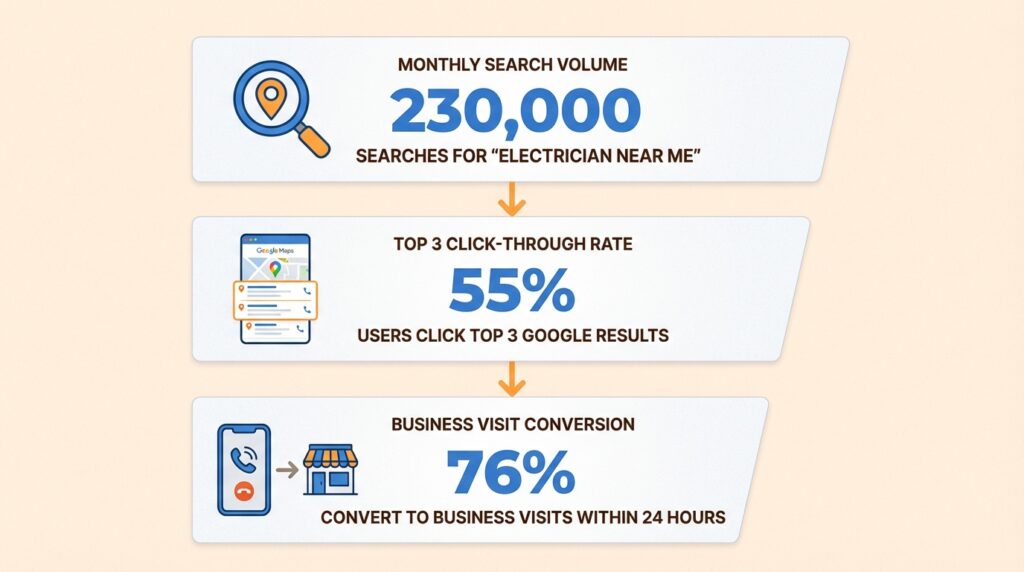
Here’s what that means for your bottom line: 76% of people who search for a local service visit a business within 24 hours. When someone’s power goes out or they need an emergency repair, they’re not browsing. They’re ready to hire. If your business appears at the top of the search results, you get the call. If you don’t, your competitor does.
The competition is fierce. The U.S. Bureau of Labor Statistics reports over 700,000 electricians and nearly 250,000 electrical contracting businesses nationwide. In most markets, you’re competing with dozens of other contractors for those top three spots in Google’s Local Pack (the map results that appear at the top of local searches).
Blue Corona’s research shows that 55% of searchers click on one of the first three entries. Page two might as well not exist. SEO isn’t just about visibility. It’s about being visible exactly when high-intent customers are ready to buy.
Strategy 1: Optimize your Google Business Profile for local SEO
Your Google Business Profile (GBP) is the single most important asset for local SEO. Whitespark’s Local Search Ranking Factors report shows that GBP signals account for 36% of your local pack rankings. That’s more than your website in many cases.
Think of your GBP as your digital storefront. It’s often the first thing potential customers see when they search for “emergency electrician” or “licensed electrician near me.” A fully optimized profile can increase your visibility in local search results by up to 70%.
Here’s your optimization checklist:
Claim and verify your listing. If you haven’t done this yet, start here. Use a Google account associated with your business and complete the verification process (phone, email, or video).
Choose the right categories. Your primary category should be “Electrician.” Add secondary categories like “Electrical installation service,” “Lighting contractor,” “Generator installation service,” and “Electrical repair service.” Each category helps you appear in different search queries.
Complete every section. Fill out your business name, address, phone number (NAP), service area, website URL, business hours, and attributes. Google prioritizes complete profiles over partially filled ones.
Write a keyword-rich description. Explain what services you provide and include location-specific keywords naturally. Mention “residential wiring,” “panel upgrades,” “EV charger installation,” and your primary service areas.
Upload high-quality photos. Post before-and-after shots of your work, team photos in branded uniforms, images of your service vehicles, and completed projects. According to Google’s internal data, businesses with photos receive 42% more direction requests and 35% more click-throughs to their websites.
Post weekly updates. Use Google Posts to share photos, promotions, seasonal service offerings, and blog links. Regular activity signals to Google that your business is active and engaged.
Enable messaging and booking. Make it easy for customers to contact you directly from your profile. Response time is a ranking factor, so reply quickly.
Track your insights regularly. Monitor how many people find your profile through searches, how many call directly from the listing, and how many request directions. This data tells you what’s working and what needs improvement.
Strategy 2: Target high-intent keywords in your SEO strategy
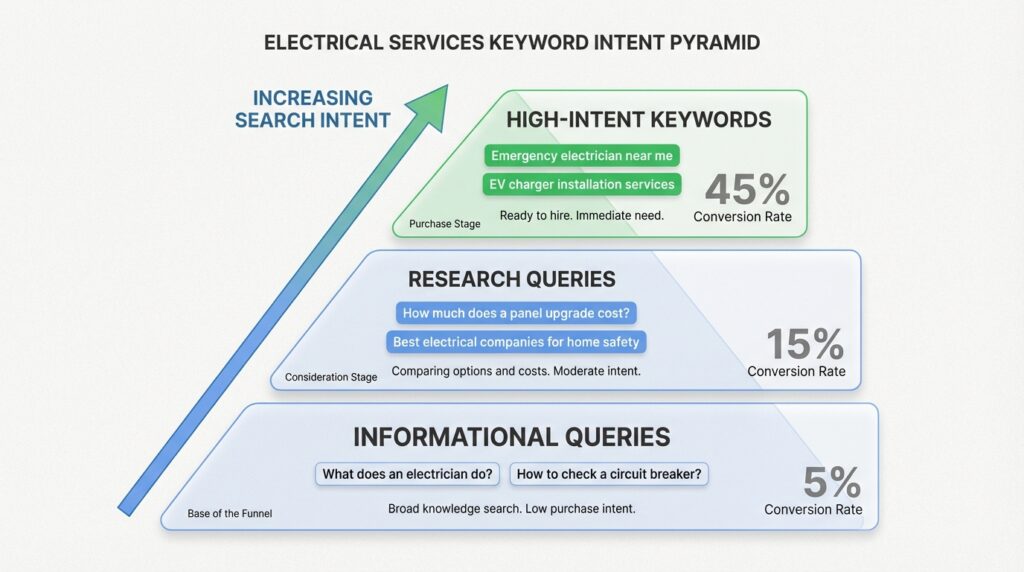
Not all keywords are created equal. Some attract browsers. Others attract buyers. For electricians, the difference between a high-intent keyword and a low-intent one can mean the difference between a tire-kicker and a booked job.
High-intent keywords signal that someone is ready to hire right now. They typically fall into three categories:
Emergency keywords: “emergency electrician [city],” “24/7 electrician near me,” “electrician open now,” “same day electrical repair.” These searchers have an urgent problem and need immediate help.
Service-specific keywords: “EV charger installation,” “electrical panel upgrade,” “circuit breaker replacement,” “home rewiring.” These indicate specific needs with clear commercial intent.
Location-based keywords: “licensed electrician [neighborhood],” “residential electrician [city],” “commercial electrician [area].” These combine service intent with geographic specificity.
Finding these keywords doesn’t require expensive tools. Start with Google’s autocomplete. Type “electrician” plus your service or city and let Google finish your sentence. The suggestions represent real, popular queries that people are actually searching.
Next, check the “People Also Ask” section below search results. These questions reveal exactly what potential customers want to know. Questions like “How much does an electrician cost?” or “Do I need a permit for panel upgrade?” are content opportunities.
For deeper research, use free tools like Google Keyword Planner or Ubersuggest. These show monthly search volume, competition level, and related keyword ideas.
Once you have your keyword list, place them strategically:
- Title tags: Include your primary keyword and location (60 characters max)
- H1 headers: Feature your main keyword naturally in your page headline
- First 100 words: Mention your focus keyword early in the content
- H2 subheadings: Incorporate keyword variations and related terms
- Image alt text: Describe images while including relevant keywords
- URL structure: Use clean, keyword-rich URLs like /services/panel-upgrades-[city]/
Avoid keyword stuffing. Google’s 2025 algorithms prioritize natural, helpful content over artificially optimized pages. Write for humans first, search engines second.
Strategy 3: Build city-specific service pages
One generic “service area” page isn’t enough. If you serve multiple cities or neighborhoods, you need dedicated landing pages for each location. This approach, known as local landing pages, helps you capture search traffic from every community you serve.
Here’s why it works: Google prioritizes content that’s relevant to the user’s location. A page titled “Emergency Electrician in Beaverton” is more likely to rank for that specific search than a generic “Portland Area Electrician” page.
Create individual pages for each city or neighborhood you serve:
- /electrician-in-[city]/
- /emergency-electrician-[city]/
- /ev-charger-installation-[neighborhood]/
- /panel-upgrades-[city]/
Each page needs unique content. Don’t copy and paste the same text across multiple pages. Google penalizes duplicate content. Instead, customize each page with:
City-specific keywords in strategic locations. Use localized keywords in your meta titles, H1 headers, H2 subheadings, and throughout the content naturally.
Local landmarks and neighborhood references. Mention specific areas, local codes, or community characteristics. For example: “Serving historic homes in [Neighborhood] with specialized knob-and-tube wiring replacement” or “Providing EV charger installation for [Area] condos with parking garage electrical infrastructure.”
Embedded Google Maps. Include a map showing your service area and proximity to that specific location. This reinforces your local relevance to both users and search engines.
Local testimonials. Feature customer reviews from that specific city or neighborhood. Social proof from nearby customers builds trust with potential clients in the same area.
Mobile-optimized click-to-call buttons. Most local electrical searches happen on mobile devices, often during emergencies. Make it effortless for customers to call you directly from these service pages.
Link these city pages to your main service pages and cross-link related city pages. Use breadcrumb navigation to help users (and search engines) understand your site structure.
Strategy 4: Master technical SEO basics for electrician websites
Technical SEO is the foundation everything else builds on. If your website is slow, unsecure, or doesn’t work on mobile devices, your other optimization efforts won’t matter. Google’s research shows that 53% of users leave a mobile website if it takes longer than 3 seconds to load. For a trade like electrical services where someone may need help fast, that’s revenue walking out the door.
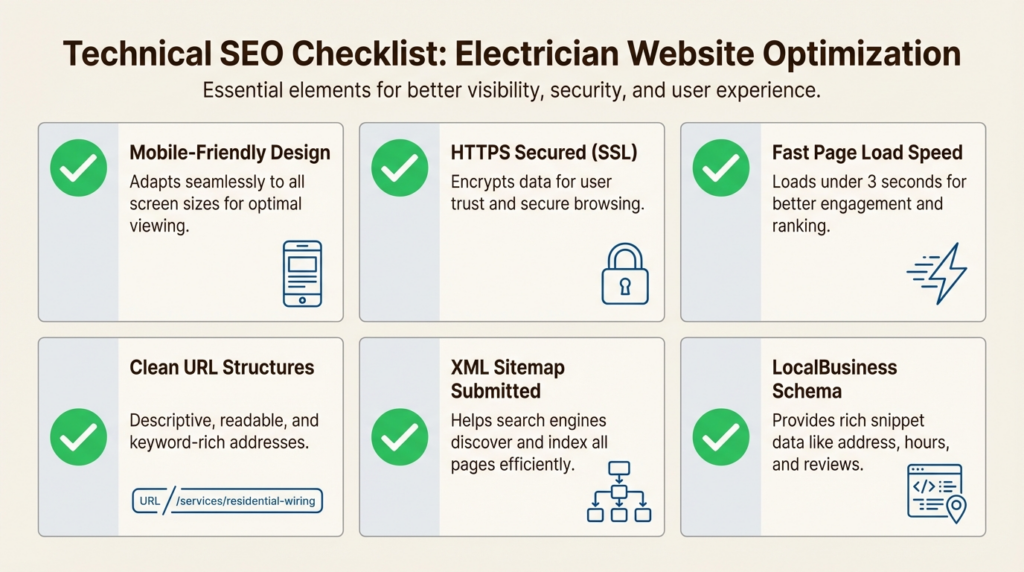
Here’s your technical SEO checklist:
Mobile responsiveness is non-negotiable. 60-70% of local searches happen on mobile devices. Your site needs to look good and function perfectly on smartphones. Use a responsive design that adjusts to all screen sizes. Keep text large enough to read without zooming. Make sure buttons have enough space between them for easy tapping.
Optimize page speed. A 1-second delay in mobile load time can reduce conversions by up to 20%. Compress images before uploading (use tools like TinyPNG). Minimize HTML, CSS, and JavaScript by removing unnecessary characters. Enable browser caching so repeat visitors load pages faster. Choose a high-performance hosting provider.
Secure your site with HTTPS. Google considers HTTPS a ranking factor. Install a TLS certificate (many hosts offer this free through Let’s Encrypt). Once activated, your site displays a padlock icon in the browser address bar, assuring visitors that their data is safe.
Use clear URL structure. Avoid long strings of numbers or unclear paths like www.yoursite.com/page?id=3829. Instead, use lowercase words separated by hyphens with relevant keywords: www.yoursite.com/services/electrical-panel-upgrades.
Submit an XML sitemap. This file lists all the important pages on your website, enabling search engines to find and index your content more efficiently. Create one using tools like Yoast SEO or submit manually through Google Search Console.
Implement schema markup. This structured data helps search engines understand your business information, services, hours, and location. For electricians, focus on:
- LocalBusiness schema
- Service schema for each offering
- FAQ schema for common questions
- Review schema for testimonials
Test your site regularly using Google PageSpeed Insights and the Mobile-Friendly Test. These tools identify specific issues and provide actionable recommendations.
Strategy 5: Generate and manage customer reviews
Reviews are more than social proof. They’re a direct ranking factor in Google’s local search algorithm. The quantity, quality, recency, and even the keywords used in reviews all impact your Local Pack visibility.
BrightLocal’s research shows that 87% of consumers read online reviews for local businesses, and 48% say they wouldn’t consider a business with fewer than 4 stars. For electricians, who deal with people’s homes and safety, that trust factor is critical.
Google’s algorithm pays attention to:
- Quantity of reviews: More reviews signal an active, established business
- Star rating average: Higher ratings improve visibility and click-through rates
- Recency: Recent reviews carry more weight than old ones
- Keywords in review text: Reviews mentioning “panel upgrade,” “licensed electrician,” or “rewire” help Google connect your profile to those services
Getting reviews requires a system. Here are tactics that work:
Ask immediately after job completion. Satisfaction is highest right after you finish a job. Make asking for reviews part of your hand-off process. Do it in person or via SMS while you’re still on-site.
Send a direct review link. Use Google’s custom review link generator or tools like Whitespark to create a simple URL. Text or email this link to customers within 24-48 hours of completing work.
Include QR codes on invoices. Make it effortless for customers to leave a review by scanning a code with their phone.
Automate follow-ups. Use tools like NiceJob, Podium, or your CRM to send automated review requests after jobs are marked complete.
Never offer incentives for reviews. This violates Google’s terms and can result in penalties or removal of reviews.
Responding to reviews is just as important as getting them. Reply to every review, positive and negative, within 24-48 hours. Use relevant keywords naturally in your responses and mention location when relevant. For example: “Thanks, Amanda! We’re glad we could help with the breaker issue at your condo in North York. Always happy to assist with emergency electrical repairs.”
Professional responses to negative reviews demonstrate that you prioritize customer satisfaction and take ownership of your work. Don’t get defensive. Acknowledge the issue, explain what happened, and offer to make it right.
Strategy 6: Create content that answers customer questions
Blogging isn’t just for big brands. For electricians, content marketing is one of the most effective ways to build authority, target long-tail keywords, and attract customers before they’re actively searching for an electrician.
HubSpot’s research shows that companies that blog get 55% more website visitors and 67% more leads than those that don’t. The key is creating content that answers real questions your customers are already searching for.
Here are blog topics that convert for electricians:
- “Why does my breaker keep tripping in winter?”
- “How much does it cost to upgrade a panel in [City]?”
- “Do I need an electrician to install an EV charger?”
- “Signs your home needs rewiring (with examples)”
- “Electrical safety checklist for new homeowners in [City]”
- “What causes frequent power surges in [Neighborhood] homes?”
These posts attract people before they’re ready to hire. When they do need an electrician, you’ll be the one they remember.
Structure your content for SEO:
Answer the question in the first paragraph. Don’t bury the lead. Give readers (and Google) a clear answer immediately.
Use headers with keywords. Break up your content with H2 and H3 subheadings that include relevant keywords.
Include internal links. Every blog post should link to relevant service pages on your site. This guides both readers and Google toward your money pages.
Add clear calls-to-action. End each post with a prompt to contact you for service.
FAQ pages are particularly powerful for voice search optimization. Structure questions conversationally: “How much does electrical panel upgrade cost?” “Do I need a permit for EV charger installation?” Use FAQ schema markup to increase your chances of appearing in featured snippets.
Strategy 7: Optimize for AI search and voice queries
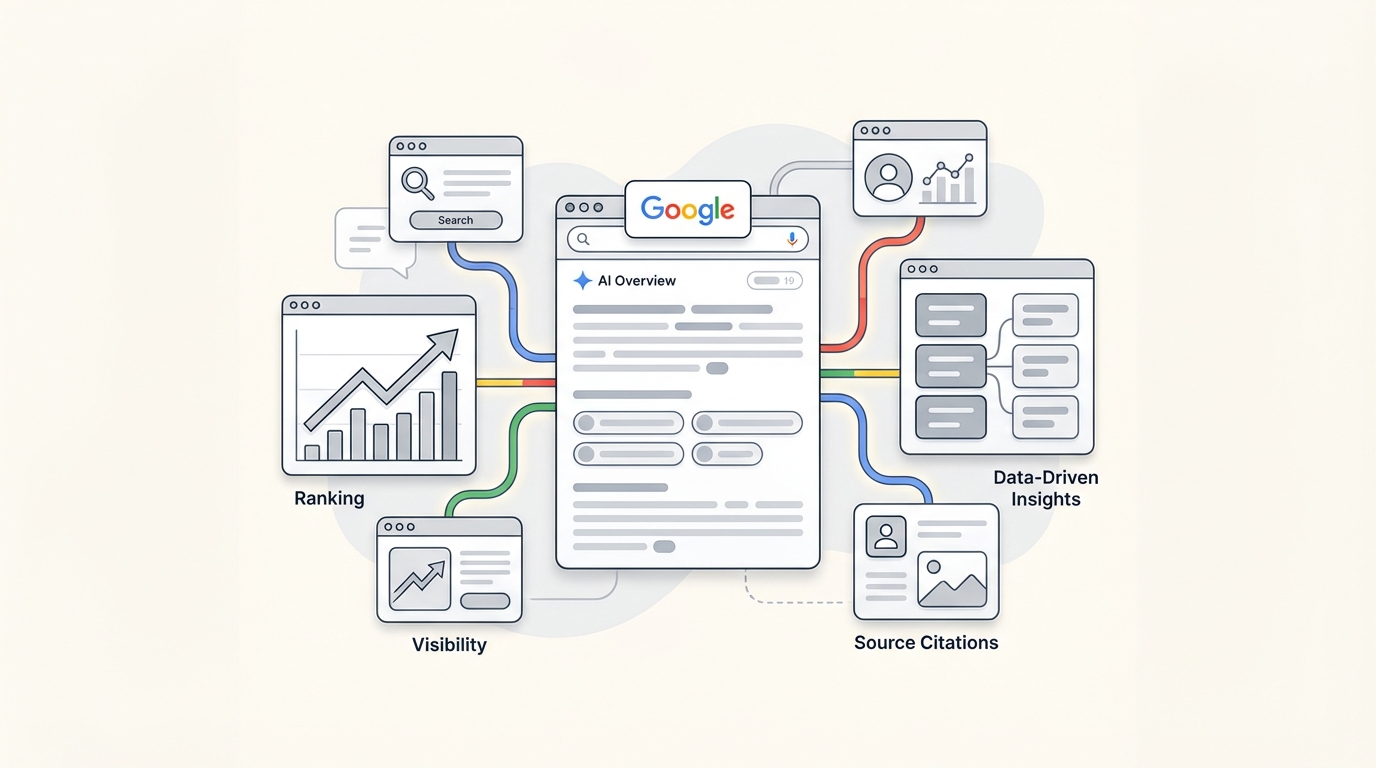
Search is changing. According to a Statista survey, around 15 million adults in the U.S. used generative AI as their primary online search tool in 2024. Google has introduced AI Overviews that appear at the top of search results, summarizing answers and linking to websites Google considers reliable.
This shift requires a new approach: Generative Engine Optimization (GEO). Here’s what electricians need to know.
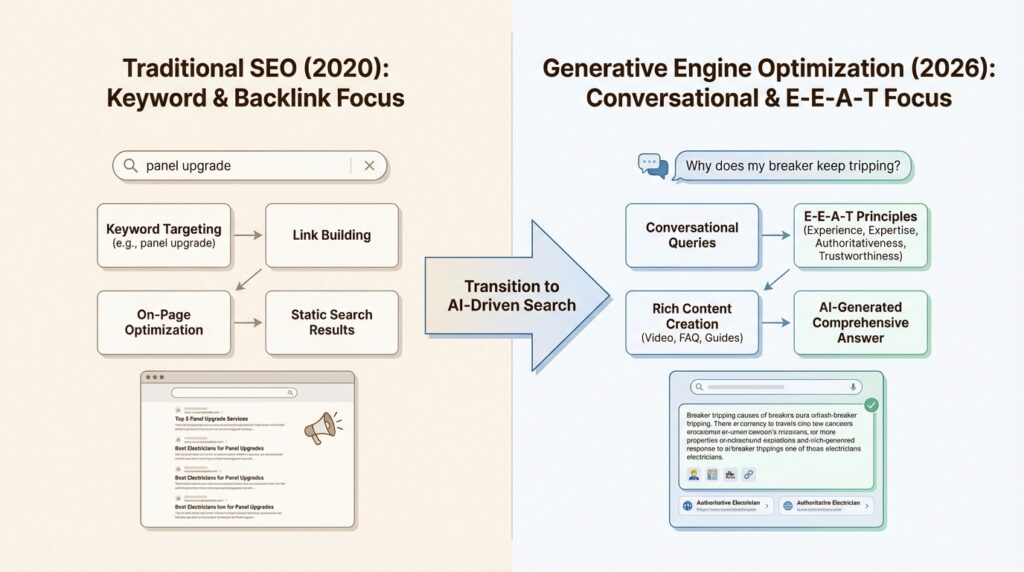
AI search favors helpful, local answers. Google’s AI pulls from websites that are clear, mobile-friendly, and fast. Your content needs to reflect how homeowners actually talk and search. Write content that matches how people naturally ask questions. Instead of “electrical panel upgrade services,” use phrases like “How do I know when my home needs a panel upgrade?”
Use natural, conversational language. AI systems understand context better than ever. Write how people speak rather than how they type. Include question phrases and complete sentences.
Answer questions directly and concisely. AI Overviews pull specific answers from content. Structure your pages so key information is easy to extract. Use clear headers, short paragraphs, and bullet points.
Target featured snippets. These are the answer boxes that appear at the top of search results. Format content as Q&A, use numbered lists for steps, and provide clear definitions.
Voice search optimization follows similar principles. People using voice assistants say things like:
- “Hey Siri, find an electrician near me right now.”
- “Alexa, who installs EV chargers in [City]?”
- “OK Google, what’s the best emergency electrician in [Area]?”
Optimize for these conversational queries by creating FAQ pages, using natural language, and ensuring your Google Business Profile is complete with accurate location information.
Focus on E-E-A-T: Experience, Expertise, Authoritativeness, and Trust. Build topical authority through comprehensive content that covers your services in depth. Get cited in reputable directories and local publications. The businesses that win in this new search experience are the ones that answer real questions in a natural way, with content that’s specific, relevant, and AI-friendly.
How to track SEO results and ROI for your electrical business
You can’t manage what you don’t measure. Without tracking, you’re flying blind. Monitoring your SEO performance helps you see what’s ranking, understand what’s driving traffic and calls, double down on strategies that work, and catch drops in visibility early.
Here are the key metrics for electricians:
Google Business Profile insights: Track total searches (how many people found your profile), direct vs. discovery searches, actions taken (calls, website clicks, direction requests), and photo views compared to competitors.
Keyword rankings: Monitor your position for important search terms like “electrician [city],” “emergency electrician,” and specific services.
Organic traffic: Use Google Analytics 4 to track visitors from organic search, which pages they visit, and how long they stay.
Phone calls and form submissions: Set up call tracking to measure how many leads come from organic search. Track form submissions and quote requests.
Conversion rate: Calculate the percentage of website visitors who contact you. This tells you if your site is effectively turning traffic into leads.
Review metrics: Track total reviews, average rating, review velocity (new reviews per month), and response rate.
Free tools to use:
- Google Search Console: See which keywords people use to find your site and identify indexing issues
- Google Analytics 4: Track user behavior, conversions, and traffic sources
- Google Business Profile dashboard: Monitor local search performance
Set up monthly or weekly reports so you can review trends without logging into multiple tools. Expect 3-6 months to see noticeable results from SEO efforts. The businesses that track consistently and optimize based on data are the ones that win long-term.
Get more electrical leads with a custom SEO strategy
Let’s recap what we’ve covered:
- Optimize your Google Business Profile (it’s your most valuable digital asset)
- Target high-intent keywords that signal ready-to-hire customers
- Build city-specific service pages for every area you serve
- Master technical SEO basics (mobile, speed, security)
- Generate and manage customer reviews systematically
- Create content that answers real customer questions
- Optimize for AI search and voice queries (the future is here)
These seven strategies work. But implementation takes time and expertise. As an electrical contractor, your focus should be on serving customers, not managing SEO campaigns.
That’s where we come in. At Decoding, we don’t do templates. We don’t deliver 50-page reports that sit unread. We create custom SEO strategies based on your specific market, competition, and goals. We focus on data-driven optimization that drives revenue, not vanity metrics.
Our approach is simple: understand your business, analyze your market, and build an actionable roadmap that gets results. We’ve helped trade businesses outrank Fortune 500 competitors and dominate their local markets.
Ready to get more leads from Google? Contact us for a free SEO audit. We’ll analyze your current visibility, identify your biggest opportunities, and show you exactly what it’ll take to rank higher and win more jobs. No fluff, no jargon, just actionable insights you can use immediately.
Frequently Asked Questions
How long does SEO for electricians take to show results?
Typically, local SEO for electricians takes 3-6 months to show noticeable improvements in rankings and traffic. However, Google Business Profile optimizations can generate leads faster, often within weeks. The timeline depends on your competition, current website state, and how consistently you implement strategies.
Can I do SEO for my electrical business myself, or should I hire an agency?
You can handle basic SEO yourself, like optimizing your Google Business Profile, getting reviews, and writing blog posts. But to outrank established competitors, especially in busy markets, hiring an expert who understands the electrical trade can save time and deliver faster, more consistent results.
What keywords should electricians target for SEO?
Focus on high-intent, location-based keywords like “emergency electrician [city],” “licensed electrician near me,” and service-specific terms like “EV charger installation” or “panel upgrade.” Include neighborhood names and long-tail phrases like “how much does electrical panel upgrade cost.”
How much does SEO cost for electrical contractors?
Costs vary based on your market competition and current website state. DIY SEO requires time investment. Professional services typically range from $500-$2,500 monthly depending on scope. Compared to paid ads, SEO is a long-term asset that continues generating leads after you stop paying.
Do electricians really need to blog for SEO?
Yes. Blogging helps target long-tail keywords, answer common customer questions, and build authority. Companies that blog get 55% more visitors and 67% more leads. Blog posts create entry points for potential clients to discover your services organically through Google.
How do I get more Google reviews as an electrician?
Ask satisfied customers immediately after completing a job. Send SMS with direct review links, include QR codes on invoices, and automate follow-ups 24-48 hours later. Never offer incentives. Respond to all reviews professionally, using relevant keywords and location mentions in your responses.
What is AI search optimization (GEO/AEO) for electricians?
Generative Engine Optimization (GEO) means structuring your content so AI systems like ChatGPT and Google’s AI Overviews can understand and cite it. Use natural, conversational language, answer questions directly, implement schema markup, and focus on E-E-A-T (Experience, Expertise, Authoritativeness, Trust).





Leave a Reply