

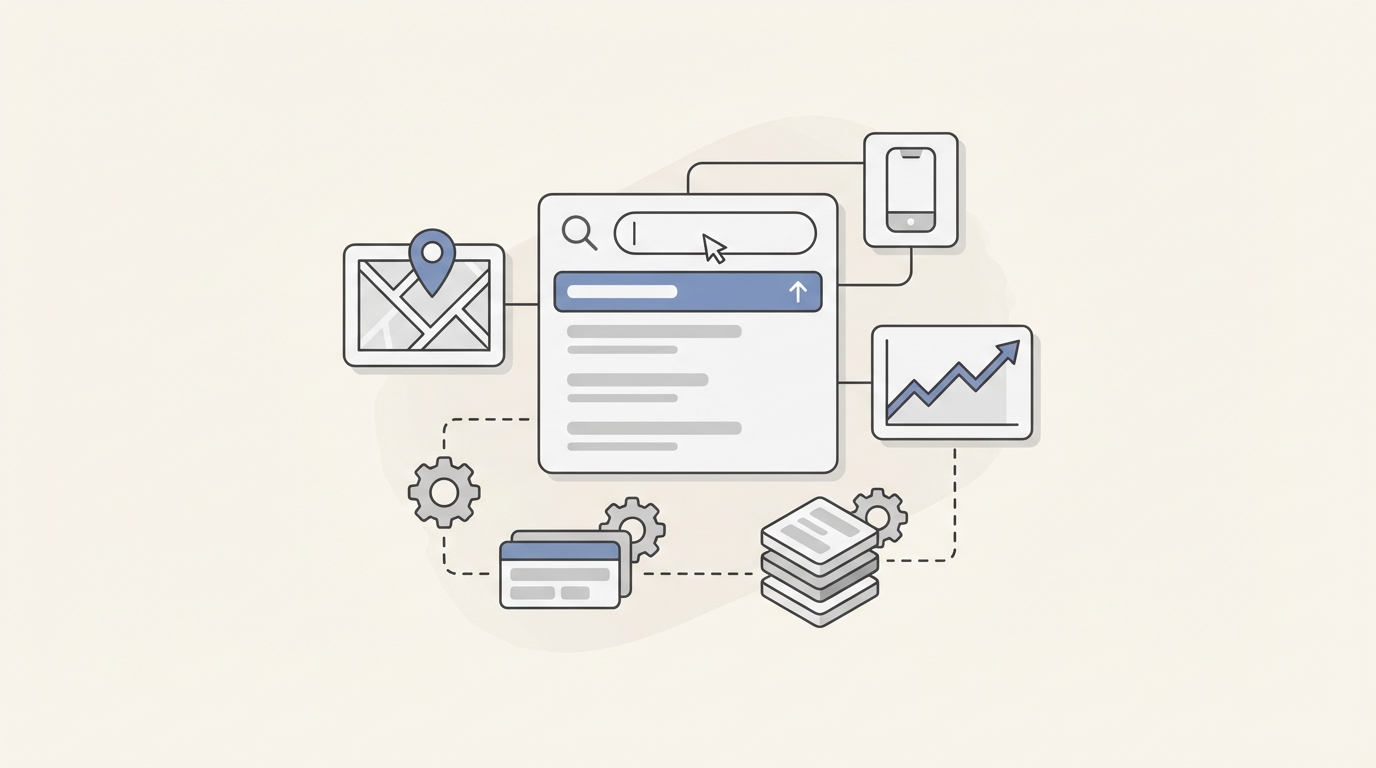
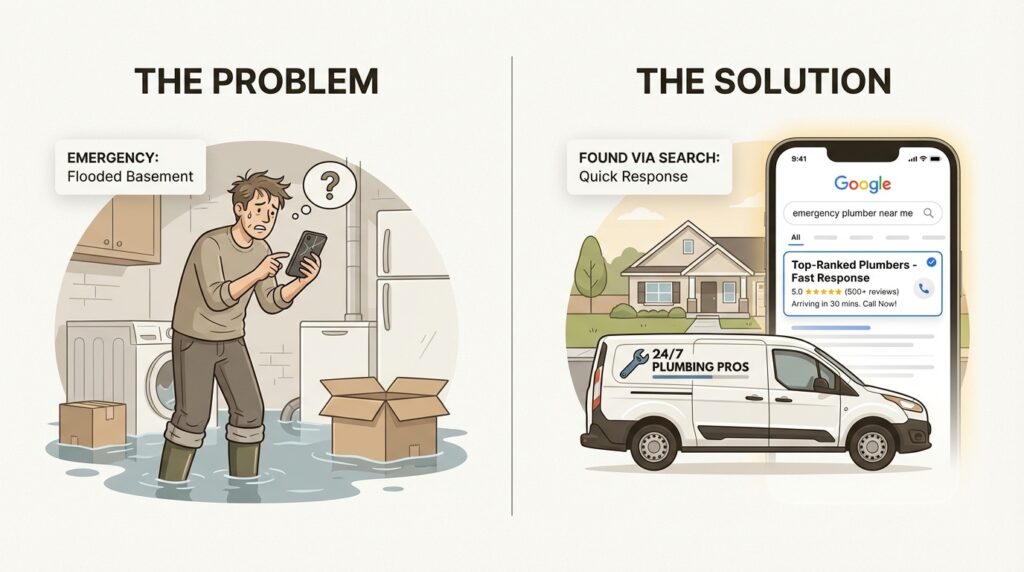
When a pipe bursts at 2 AM, homeowners don’t flip through the Yellow Pages anymore. They grab their phones and search “emergency plumber near me.” If your plumbing business isn’t showing up in those critical moments, you’re not just missing calls. You are handing jobs directly to your competitors.
SEO for plumbers isn’t about vanity metrics or bragging about being “number one on Google.” It’s about being visible when customers need you most. And in the plumbing business, timing is everything.
Why SEO matters for plumbing businesses
Let us look at the numbers. Each month, customers in the U.S. perform almost 2.9 million online searches for plumbers and plumbing companies. That’s nearly 100,000 people every single day looking for the exact services you provide.
Here is the catch: 46% of all Google searches have local intent, and plumbing is one of the most locally-driven industries out there. When someone’s basement is flooding, they are not looking for a plumber three states away. They need someone who can be at their door within the hour.
The urgency factor makes plumbing SEO unique. Unlike other home services where customers might research for weeks, plumbing needs are immediate. A leaky water heater, a clogged sewer line, a burst pipe. These problems demand instant solutions. That is why 80% of local search leads convert. When someone searches for a plumber, they’re ready to hire right now.
The phone-first conversion model is another key difference. While other industries optimize for form submissions and email signups, plumbers win when the phone rings. Your SEO strategy needs to prioritize click-to-call functionality, prominent phone numbers, and mobile optimization. Every element should be engineered to make that phone ring, because in plumbing, the business that answers first usually gets the job.
Bottom line? If you’re not on page one of Google, you’re invisible. 75% of people never scroll past the first page, and 47% of all clicks go to the top three rankings. Being on page two isn’t just less effective. It’s practically worthless.
Understanding how customers search for plumbers
Not all plumbing searches are created equal. Understanding the different types of queries your potential customers use will shape your entire SEO strategy.
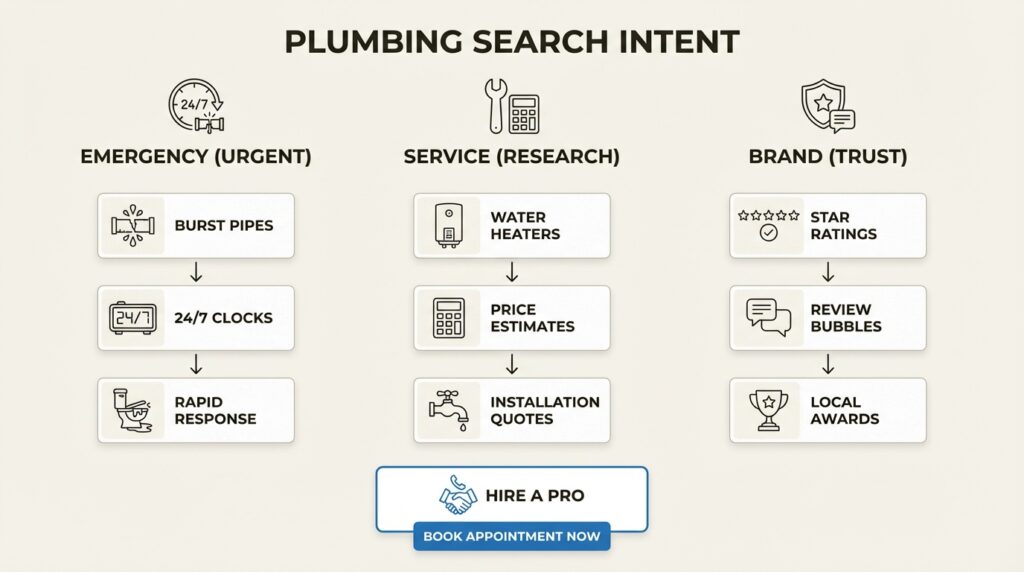
Emergency queries represent your highest-value leads. These include searches like “emergency plumber near me,” “burst pipe repair now,” or “24 hour plumber.” These customers have an immediate problem and are ready to pay premium rates for fast service. Your website needs to signal that you handle emergencies with clear messaging, 24/7 availability indicators, and instant contact options.
Service queries come from customers researching specific solutions. “Water heater installation cost,” “drain cleaning service,” or “tankless water heater pros and cons.” These searchers are in evaluation mode. They might not need service today, but they’re planning for next week or next month. Target these with detailed service pages, cost guides, and educational content that demonstrates your expertise.
Brand and comparison queries happen when customers evaluate their options. “Best plumber in [city],” “plumber reviews [neighborhood],” or “affordable plumber near me.” These searches indicate someone is comparing providers. Win these with strong review profiles, professional websites, and trust signals like licenses, insurance, and guarantees.
The mobile factor can’t be overstated. Over 60% of Google searches happen on mobile devices, and for emergency services, that number is even higher. Someone standing in a flooded kitchen isn’t walking to their desktop computer. They’re searching on their phone with wet hands.
Voice search is also changing the game. “Hey Google, find a plumber near me” or “Alexa, who fixes water heaters in [city]?” These conversational queries require natural language optimization and FAQ-style content that matches how people actually speak.
AI search platforms like ChatGPT and Perplexity are increasingly influencing how customers find service providers. Learn more about optimizing for AI search to ensure your plumbing business appears in these emerging channels.
Google Business Profile optimization for plumbers
Your Google Business Profile (GBP) is the single most important asset in your local SEO strategy. It’s often the first thing potential customers see when they search for a plumber, appearing prominently in Google Maps and the Local 3-Pack.
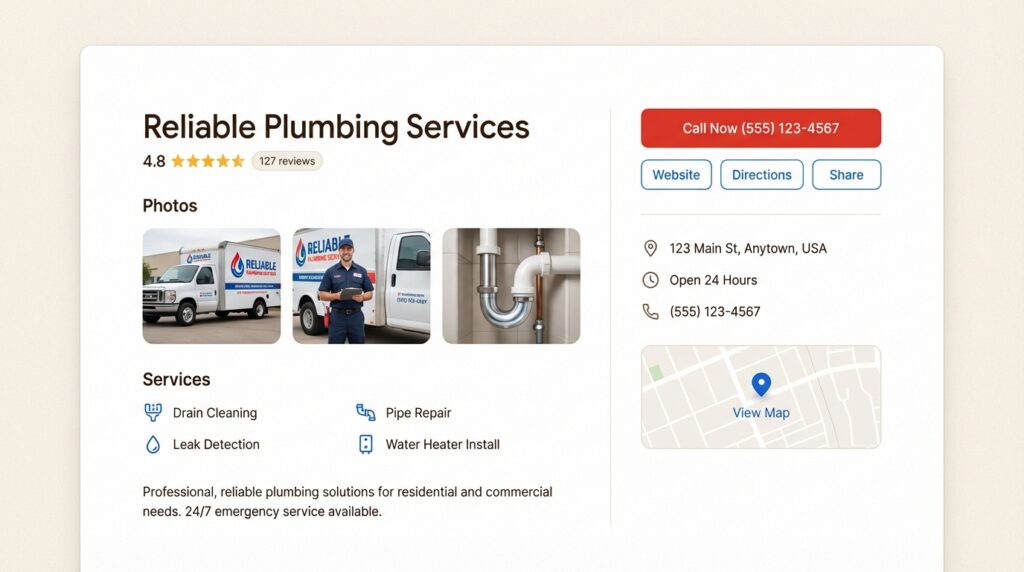
Setting up your profile is straightforward, but optimization requires attention to detail. Start by claiming your business at Google Business Profile Manager. You’ll need to verify your business, typically through a postcard mailed to your address.
Category selection is critical. Your primary category should be “Plumber.” Add relevant secondary categories like “Emergency Plumber,” “Drain Cleaning Service,” or “Water Heater Repair Service.” These categories help Google understand exactly what services you offer and match you to relevant searches.
Complete every field in your profile. Business name, address, phone number, website, hours of operation. Be specific about your service areas if you don’t have a physical storefront customers visit. List every city and neighborhood you serve.
The services section deserves special attention. Don’t just list “plumbing services.” Break it down into specific offerings: emergency plumbing, drain cleaning, water heater repair, leak detection, sewer line services, fixture installation. Add detailed descriptions for each service that include relevant keywords naturally.
Photos are a ranking factor and a trust signal. Upload high-quality images of your trucks, your team in uniform, completed jobs, before-and-after shots, and your office. Update photos weekly if possible. Profiles with fresh, relevant photos rank higher and get more engagement.
Google Posts let you share updates, offers, and seasonal reminders directly on your profile. Post weekly about things like “Fall water heater maintenance special” or “24/7 emergency service available.” These posts keep your profile active and give customers more reasons to choose you.
The Q&A section is often overlooked. Seed it with common questions like “Do you offer 24/7 emergency service?” or “What areas do you serve?” and provide detailed answers. This helps potential customers and signals to Google that you’re engaged with your profile.
NAP consistency is non-negotiable. Your Name, Address, and Phone number must be identical across your website, GBP, and every directory listing. Even small variations (“St.” vs “Street” or different phone number formats) can confuse Google and hurt your rankings.
Website optimization for plumbing SEO
Your website is your digital storefront. It needs to load fast, look professional, and make it incredibly easy for customers to contact you.
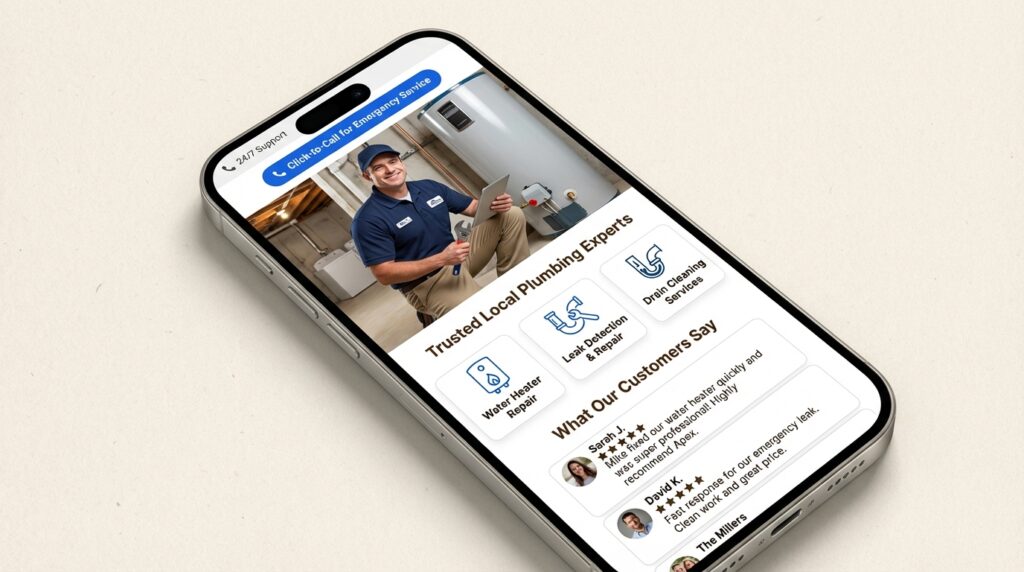
Mobile-first design is essential. Your site must be fully responsive, meaning it adapts perfectly to any screen size. Buttons need to be large enough to tap with a thumb. Text needs to be readable without zooming. And most importantly, your phone number needs to be clickable for instant calling.
Page speed directly impacts both rankings and conversions. Compress your images, minimize code, and use fast hosting. Every second of delay increases bounce rates. When someone’s water heater is flooding their basement, they won’t wait 10 seconds for your site to load. They’ll hit the back button and call your competitor.
Security matters too. An SSL certificate (HTTPS) is a ranking signal and builds trust. Customers are increasingly savvy about website security, especially when they’re about to invite a service provider into their home.
Schema markup helps search engines understand your content. Implement LocalBusiness schema with details like your service area, hours, and accepted payment methods. This structured data can help you appear in rich snippets and improve your visibility.
Service-specific pages are where SEO converts to revenue. Create individual pages for each major service you offer: drain cleaning, water heater repair, leak detection, sewer line services, fixture installation. Each page should target specific keywords and provide detailed information about that service.
A well-structured service page includes:
- A keyword-rich headline like “Emergency Drain Cleaning in [City] | 24/7 Service”
- Clear description of the problem you solve
- Your process explained in simple terms
- Service area details
- Trust signals (licenses, insurance, guarantees)
- Clear call-to-action with click-to-call phone number
Location pages can help you rank in multiple service areas, but only create them for places you actually serve. Each location page needs unique content that mentions specific neighborhoods, local landmarks, and customer testimonials from that area. Don’t create thin, templated pages for cities you don’t serve. Google penalizes doorway pages.
Your About page builds trust and demonstrates E-E-A-T (Experience, Expertise, Authoritativeness, Trustworthiness). Include your licensing information, years in business, team photos, and company history. This isn’t just fluff. Google considers these signals when ranking local businesses.
The Contact page should have your phone number prominently displayed, an embedded Google Map, your full address, business hours, and a simple contact form. Make it impossible for customers to struggle to reach you.
Local citations and directory listings
Citations are mentions of your business name, address, and phone number on other websites. They’re a foundational ranking factor for local SEO, helping Google verify that your business is legitimate and established.
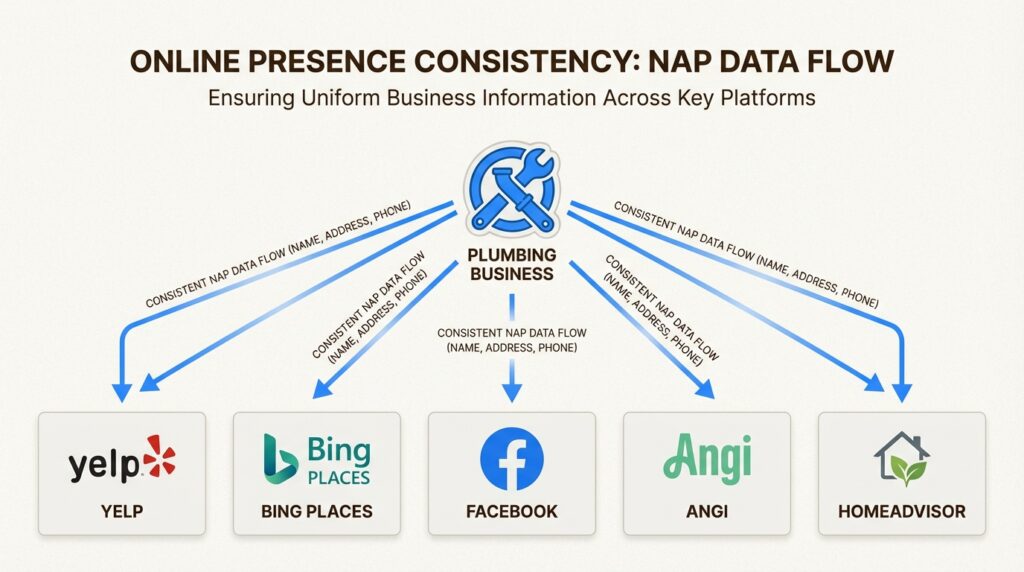
Start with the major directories:
Each listing should have identical NAP information. Even minor inconsistencies (“Ave” vs “Avenue”) can dilute your citation value. Be meticulous about accuracy.
Industry-specific directories matter too. Look for plumbing associations, contractor networks, and home service platforms in your area. These niche citations often carry more weight than general directories because they’re highly relevant to your business category.
Don’t overlook your local Chamber of Commerce. Membership often includes a directory listing, and these local links signal strong geographic relevance to Google.
Managing citations manually becomes time-consuming as you scale. Tools like BrightLocal and WhiteSpark can help you find citation opportunities, track existing listings, and monitor for inconsistencies.
Duplicate listings are a common problem. If your business has moved, changed names, or has multiple phone numbers, you might have conflicting listings scattered across the web. Find and eliminate duplicates. They confuse customers and split your citation value.
Review generation and management
Reviews are a major ranking factor for local SEO, and they’re often the deciding factor for customers comparing plumbers. A strong review profile builds trust before you even answer the phone.
Quantity matters, but quality and recency matter too. A profile with 50 recent 5-star reviews beats one with 200 reviews from three years ago. Google wants to see that your business is actively serving customers and maintaining high standards.
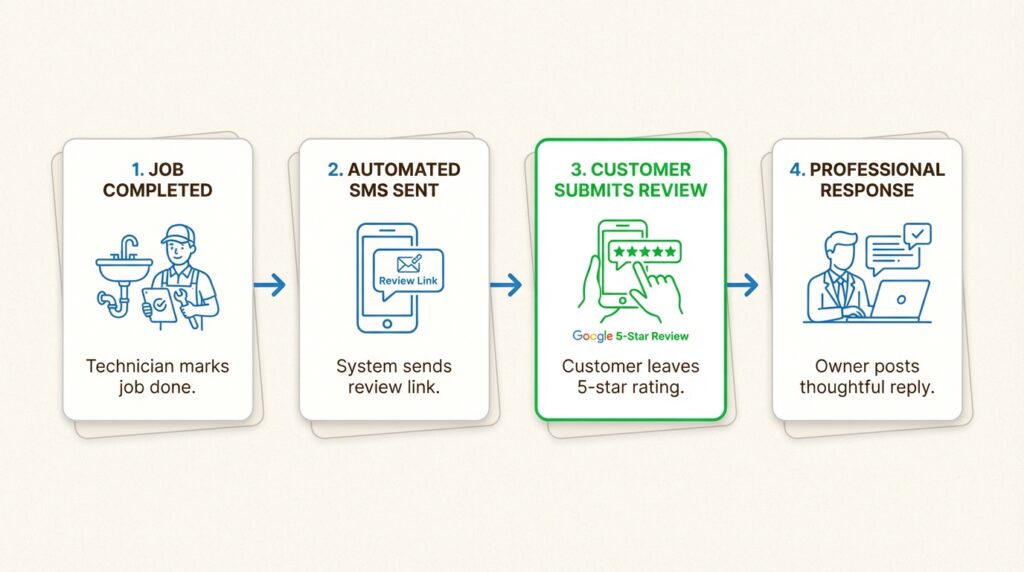
Developing a review generation system is essential. The best time to ask is immediately after completing a job, while the positive experience is fresh. Train your technicians to mention reviews naturally: “If you were happy with the service today, we’d really appreciate a quick review on Google. It helps other homeowners find us.”
Make leaving a review as easy as possible. Send follow-up text messages with a direct link to your Google review page. Include QR codes on invoices that customers can scan with their phones. Tools like Jobber can automate review requests after job completion.
Responding to reviews shows engagement and professionalism. Thank customers for positive reviews with personalized responses. Address negative reviews calmly and constructively. Never argue or get defensive. A professional response to a negative review can actually build more trust than the review itself damages.
Here’s a framework for handling negative reviews:
- Acknowledge the issue and apologize for their experience
- Take responsibility without making excuses
- Offer to make it right
- Move detailed discussion offline by inviting them to call you directly
- Follow up privately to resolve the issue
Review monitoring tools can alert you when new reviews are posted. This lets you respond quickly and address any issues before they escalate. Google Business Profile has built-in notifications, and third-party tools can monitor multiple platforms simultaneously.
Content strategy for plumbing websites
Content marketing for plumbers isn’t about going viral. It’s about answering the questions your customers are already searching for.
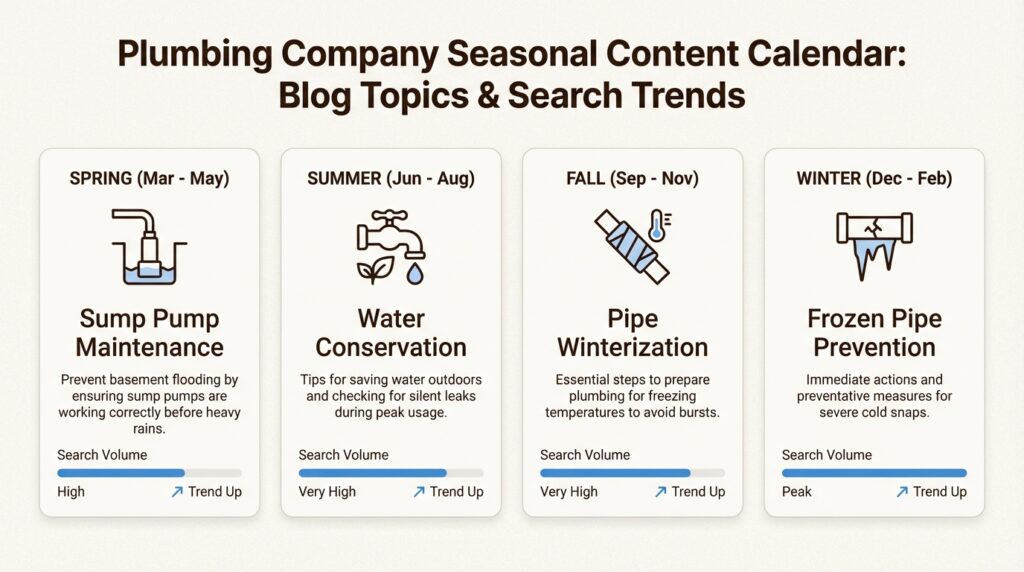
Blogging serves multiple purposes. It targets long-tail keywords, demonstrates expertise, and gives you content to share on social media. But what should you write about?
Start with common plumbing problems. “Why is my water heater making noise?” “How to prevent frozen pipes in winter.” “Signs your sewer line needs replacement.” These informational queries might not convert immediately, but they build awareness and establish you as the expert homeowners turn to when problems arise.
Seasonal content performs well. “Spring plumbing maintenance checklist.” “Preparing your pipes for winter.” “Summer water conservation tips.” These timely articles attract searches during specific periods and can be updated and repromoted annually.
Cost guides are incredibly popular. “How much does water heater installation cost in [city]?” “Drain cleaning prices: what to expect.” Be transparent about pricing factors without committing to specific quotes. This builds trust and qualifies leads who understand your price range.
FAQ pages target voice search queries and long-tail keywords. Structure them with clear questions and concise answers. Use schema markup to increase your chances of appearing in featured snippets.
Video content is increasingly important. Quick DIY fixes (that don’t cannibalize your service calls), maintenance tips, and “meet the team” videos build trust and engagement. YouTube is the second-largest search engine, and videos often appear in Google search results.
Case studies and before/after galleries showcase your work. Document challenging jobs (with customer permission), explain the problem, your solution, and the results. This social proof is powerful for convincing hesitant customers.
Keyword research for plumbers follows a simple formula: service + location. “Drain cleaning in [city].” “Emergency plumber [neighborhood].” “Water heater repair near me.” Use tools like Google Keyword Planner, Ubersuggest, or SEMrush to find search volumes and competition levels.
Don’t ignore emergency keywords. “24 hour plumber,” “emergency plumbing service,” and “plumber open now” have high intent and command premium rates. Make sure you have dedicated pages targeting these terms.
Tracking and measuring SEO success
You can’t improve what you don’t measure. Effective SEO requires tracking the right metrics and using data to guide your strategy.
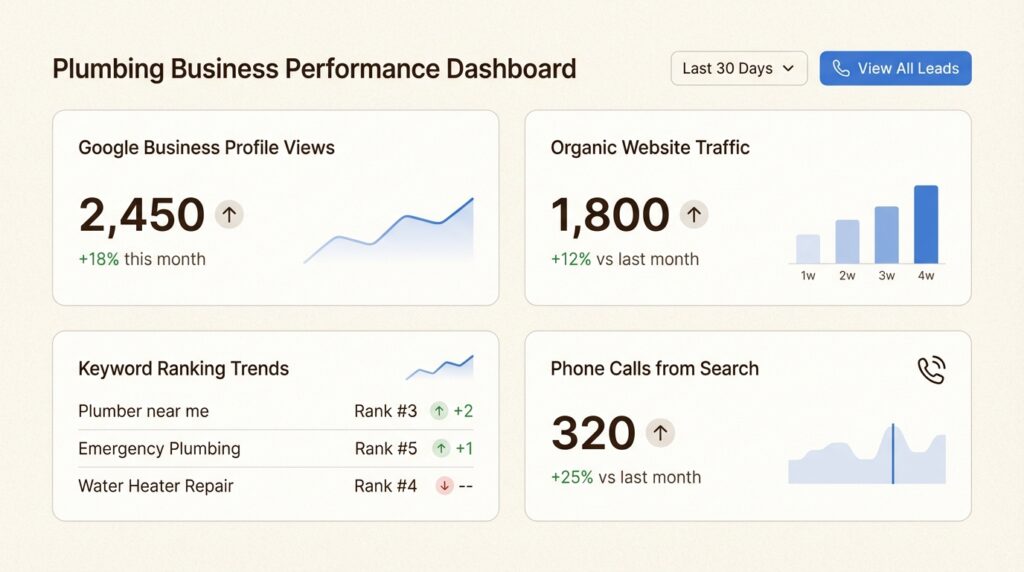
Google Business Profile Insights shows how customers find and interact with your profile. Track profile views, direction requests, website clicks, and phone calls. Look for trends over time and spikes after specific optimizations.
Website analytics reveal how visitors interact with your site. Google Analytics tracks traffic sources, popular pages, bounce rates, and conversion paths. Set up goals to track form submissions and phone number clicks.
Google Search Console shows which queries bring people to your site, your average position for each keyword, and click-through rates. This data reveals opportunities to improve existing content and identify new keywords to target.
Keyword rankings should be monitored regularly. Tools like SEMrush, Ahrefs, or BrightLocal track your positions for target terms. Don’t obsess over daily fluctuations, but watch for long-term trends.
For a comprehensive view of how your brand appears across AI search platforms, use our AI Brand Visibility Tracker to monitor citations and mentions in ChatGPT and other LLMs.
Call tracking is essential for accurate attribution. Use different phone numbers for your website, Google Business Profile, and paid ads to see which channels generate the most calls. Services like CallRail provide detailed analytics on call sources, duration, and outcomes.
The ultimate metric is booked jobs and revenue. Track how many leads convert to appointments and how many appointments become paying customers. Calculate your cost per lead and return on investment from SEO efforts.
Create a simple monthly report that tracks:
- Total website traffic and organic traffic
- Google Business Profile views and actions
- Keyword ranking changes
- Phone calls and form submissions
- Booked jobs and revenue from organic leads
Review this data monthly to identify what’s working and where to focus your efforts.
Getting started with plumber SEO today
SEO isn’t a one-time project. It’s an ongoing investment that compounds over time. But you don’t need to do everything at once. Here’s how to prioritize.
Week 1: Quick wins
- Claim and optimize your Google Business Profile
- Ensure NAP consistency across your website and major directories
- Add click-to-call phone numbers to your website
- Set up Google Analytics and Search Console
Month 1: Foundation building
- Create or optimize service pages for your top 5 services
- Build citations on major directories
- Implement a review generation system
- Fix any technical issues (mobile usability, page speed, HTTPS)
Month 2-3: Content and expansion
- Start publishing weekly blog posts
- Create location pages for your primary service areas
- Build local backlinks through partnerships and sponsorships
- Expand citation building to industry-specific directories
Ongoing: Maintenance and growth
- Monitor and respond to reviews weekly
- Publish fresh content regularly
- Track rankings and adjust strategy based on data
- Stay current with algorithm updates and industry changes
When should you hire an agency? If you’re spending more time on marketing than running your business, it’s time to delegate. If you’ve tried DIY SEO for six months without results, you might need expert help. If you’re expanding to multiple locations or facing aggressive competition, professional support can accelerate your growth.
At Decoding, we specialize in helping plumbing businesses dominate local search. Our approach combines traditional SEO fundamentals with cutting-edge AI search optimization, ensuring you show up not just on Google, but in ChatGPT, Google Overviews, and emerging AI search platforms.
We also offer local SEO services specifically designed for service-area businesses like plumbing companies. And with our AI Brand Visibility Tracker, you can monitor exactly how your business appears across AI search platforms.
We don’t deliver 50-page reports filled with jargon. We provide clear, actionable roadmaps focused on one thing: getting your phone to ring with qualified leads ready to book.
Ready to stop losing jobs to competitors? Get a free SEO audit and discover exactly what’s holding your plumbing business back from ranking #1.
Frequently Asked Questions
How long does SEO for plumbers take to show results?
Most plumbing businesses see initial improvements in 3-4 months, with significant results typically appearing within 6-12 months. Local SEO can move faster than national campaigns because you’re competing in a smaller geographic area. Quick wins like Google Business Profile optimization can generate calls within weeks.
What’s the most important SEO tactic for plumbers?
Google Business Profile optimization is the highest-impact activity for most plumbing businesses. It directly influences your visibility in Google Maps and the Local 3-Pack, where the majority of local plumbing searches convert. After GBP, focus on building consistent citations and generating positive reviews.
How much should plumbers budget for SEO?
DIY SEO costs time but minimal money beyond tools (roughly $100-300/month for essential software). Professional SEO services for plumbers typically range from $1,500 to $5,000 monthly depending on competition and scope. The key is tracking ROI: if your SEO generates $10,000 in new monthly revenue, even a $3,000 investment delivers strong returns.
Can I do SEO for my plumbing business myself?
Absolutely. Many successful plumbing businesses handle their own SEO, especially in less competitive markets. The fundamentals (Google Business Profile, citations, reviews, basic website optimization) are learnable and don’t require technical expertise. However, as competition increases or you expand to multiple locations, professional help becomes valuable.
How do I rank higher than other plumbers in my area?
Outranking competitors requires excelling across all local SEO factors: more and better reviews, stronger website optimization, more authoritative backlinks, and more complete citation profiles. Analyze what top-ranking competitors are doing and do it better. Focus on what makes your business unique and emphasize those differentiators in your content and profiles.
Do I need a blog for my plumbing website?
While not strictly required, a blog significantly accelerates SEO success. It lets you target long-tail keywords, demonstrate expertise, and attract links from other websites. Even publishing one article monthly can generate meaningful traffic over time. Focus on answering real customer questions rather than keyword-stuffed fluff.
How important are online reviews for plumber SEO?
Reviews are critical. They’re a major ranking factor for local search, influence click-through rates, and often determine which plumber a customer calls. Aim for a steady stream of new reviews (quantity matters), maintain a high average rating (4.5+ stars ideally), and respond to every review to show engagement.









Leave a Reply