


Search is changing. While Google still dominates, a new challenger has emerged that businesses can’t afford to ignore. ChatGPT now handles over a billion queries daily from more than 300 million weekly users. That’s not a side project anymore. It’s a fundamental shift in how people find information.
The question isn’t whether SEO for ChatGPT matters. It’s whether your business will be visible when potential customers ask AI for recommendations.
What is SEO for ChatGPT (and why does it matter now)?
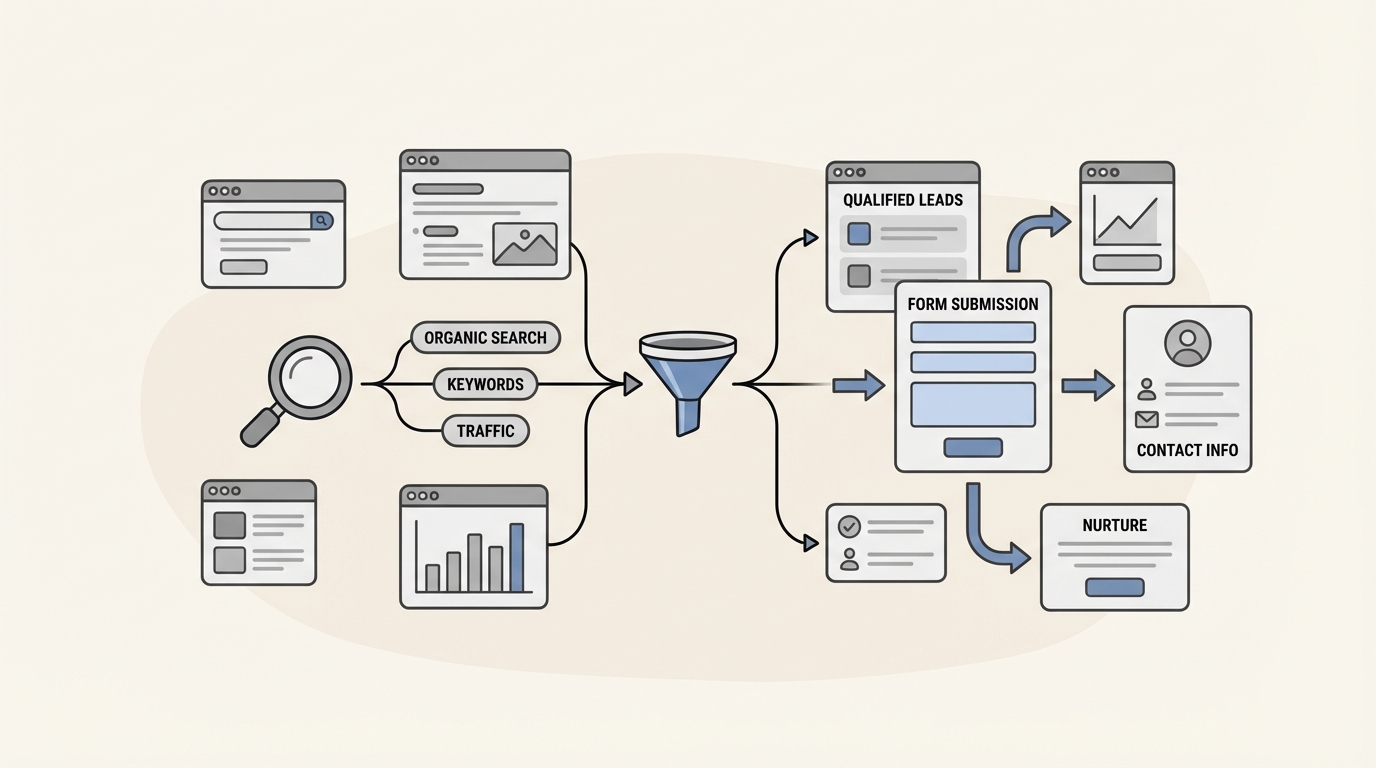
SEO for ChatGPT, also called Generative Engine Optimization (GEO), is the practice of optimizing your website to be cited and referenced by AI systems like ChatGPT, Perplexity, and Claude. Unlike traditional SEO, which focuses on ranking in search engine results pages, GEO focuses on becoming a source that AI systems trust and reference in their responses. For a deeper dive into AI search optimization strategies, see our guide to AI search optimization.
The distinction matters because the search landscape is fragmenting. An Ahrefs study found that 63% of websites now see traffic from AI platforms. While that traffic currently represents less than 1% of total visits for most sites, the trajectory is clear. Google search volume per user dropped 20% from 2024 to 2025. People are changing their behavior.
Traditional SEO targets Google’s algorithm. GEO targets how AI systems select, evaluate, and cite sources. Both require quality content and technical foundations, but GEO places additional emphasis on:
- Conversational query matching (how people actually ask questions)
- Citation-worthy content structure (clear, attributable facts)
- Brand authority signals (mentions across the web, not just backlinks)
Early adopters gain a significant advantage. Just as businesses that invested in Google SEO in 2005 dominated their niches for years, those who optimize for AI search now will establish citation patterns that become self-reinforcing.
How ChatGPT Search actually works
OpenAI’s SearchGPT combines the conversational capabilities of large language models with real-time web access. When a user asks a question, SearchGPT doesn’t just retrieve pre-trained knowledge. It actively searches the web through Bing, evaluates sources, and synthesizes answers with clear citations.
This matters for two reasons. First, it means ChatGPT can answer questions about current events, recent product launches, and breaking news. Second, it means your content can appear in responses even if it wasn’t in ChatGPT’s original training data.
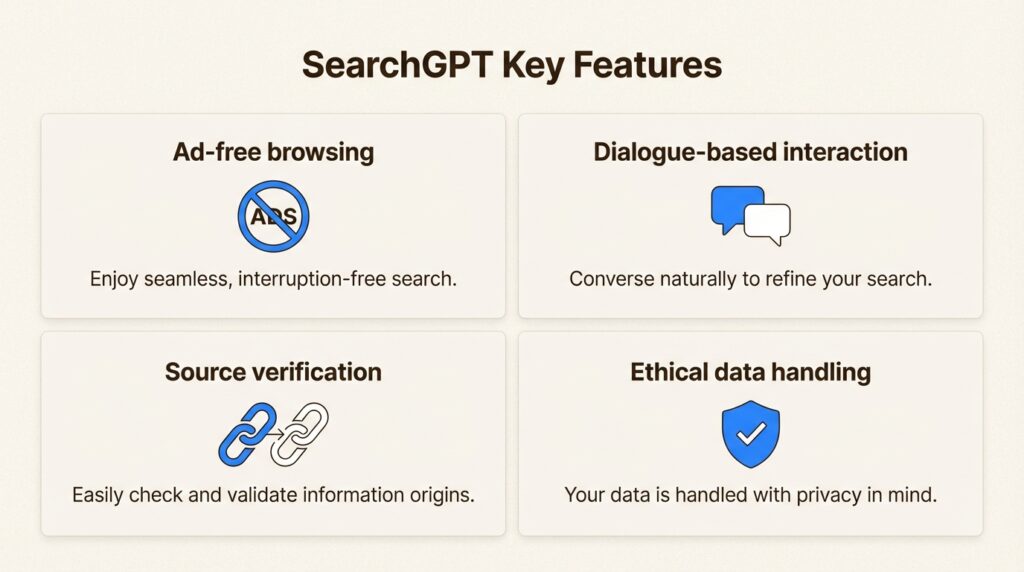
Key features that define the SearchGPT experience:
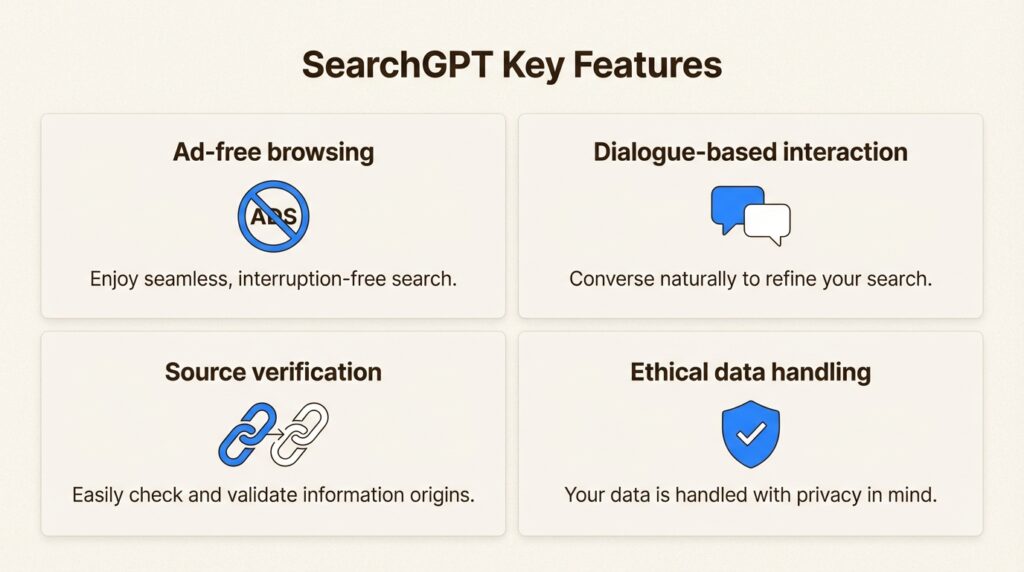
- Ad-free browsing. Unlike Google, SearchGPT doesn’t display paid advertisements alongside results. This changes the competitive dynamic. You can’t buy visibility. You earn it through content quality.
- Dialogue-based interaction. Users can ask follow-up questions that build on previous context. This rewards comprehensive content that anticipates related queries.
- Source verification. Every response includes citations linking directly to original sources. Users can click through to verify information or explore deeper.
- Ethical data handling. OpenAI has taken a notable stance: content retrieved during searches is not used to train its AI models. This addresses publisher concerns about uncompensated use of their content.
The difference between ChatGPT’s training data and SearchGPT
ChatGPT’s base training data has a cutoff (currently pre-2021 for the base model). This limitation created the famous “knowledge gap” where ChatGPT couldn’t discuss recent events.
SearchGPT solves this by accessing Bing’s real-time index. When SearchGPT is activated, it searches the live web, retrieves current information, and incorporates it into responses. This means:
- Fresh content can appear immediately. You don’t need to wait for model retraining.
- Current pricing, availability, and news can be referenced accurately.
- Bing optimization directly impacts ChatGPT visibility. If Bing can’t find your content, ChatGPT can’t cite it.
For content strategy, this means maintaining evergreen foundations while publishing timely updates. Your core expertise should be comprehensive and stable. Your industry commentary should be current and frequent.
Core ranking factors for ChatGPT and AI search
What makes ChatGPT choose one source over another? While OpenAI hasn’t published a complete ranking algorithm, industry research and observed behavior reveal consistent patterns.
The five pillars of AI search authority
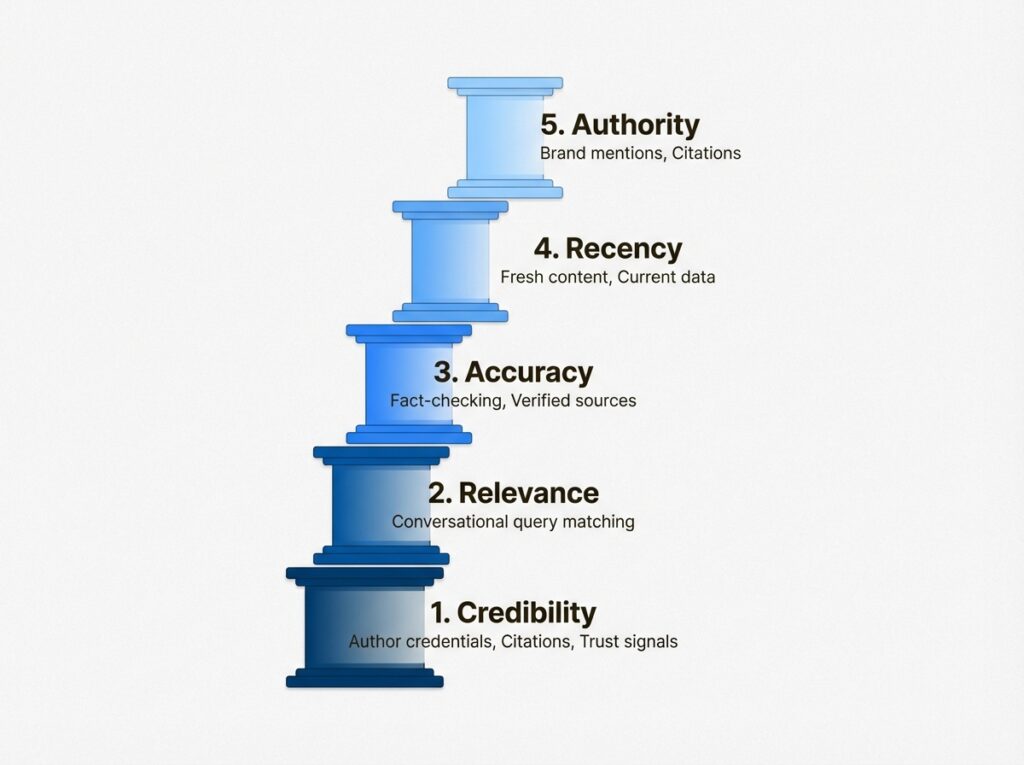
1. Credibility
AI systems evaluate whether a source is trustworthy. Signals include:
- Author credentials and bios
- Citation of authoritative sources
- Professional website design
- Clear contact information and organization details
- Trust seals and security indicators
2. Relevance
Content must directly address the query intent. ChatGPT queries tend to be conversational and informational. Most users ask “what is,” “how to,” and “why” questions. Your content should answer these directly.
3. Accuracy
Factual correctness is non-negotiable. AI systems cross-reference claims against multiple sources. Content with errors, outdated statistics, or unsupported assertions gets filtered out.
4. Recency
Fresh content signals active expertise. Regular updates, current statistics, and recent publication dates all contribute to perceived relevance. This doesn’t mean rewriting everything monthly. It means auditing key pages quarterly and updating stale information.
5. Authority
Brand mentions across the web matter more than traditional backlinks alone. When other reputable sites reference your brand, it signals that you’re a recognized player in your space. Reviews, citations, and industry discussions all contribute.
E-E-A-T and AI search
Google’s E-E-A-T framework (Experience, Expertise, Authoritativeness, Trustworthiness) applies directly to GEO:
- Experience: Demonstrate first-hand knowledge through case studies, original research, and detailed examples
- Expertise: Highlight author qualifications, professional backgrounds, and specialized knowledge
- Authoritativeness: Earn mentions from recognized sources, publish original research, contribute to industry discussions
- Trustworthiness: Ensure accuracy, cite sources, maintain transparency about your organization
Why Bing optimization is critical for ChatGPT visibility
SearchGPT uses Bing’s index for real-time web access. This isn’t a minor technical detail. It’s the foundation of your ChatGPT SEO strategy.
If your site isn’t indexed by Bing, it cannot appear in SearchGPT responses. Full stop.
Practical implications:
- Submit your sitemap to Bing Webmaster Tools
- Monitor Bing’s crawl and index status for your key pages
- Optimize for Bing ranking factors (which overlap significantly with Google’s)
- Ensure your robots.txt allows Bing’s crawler (Bingbot)
Bing’s market share may be smaller than Google’s, but for AI search visibility, it’s the only game in town.
Step-by-step: How to optimize your website for ChatGPT
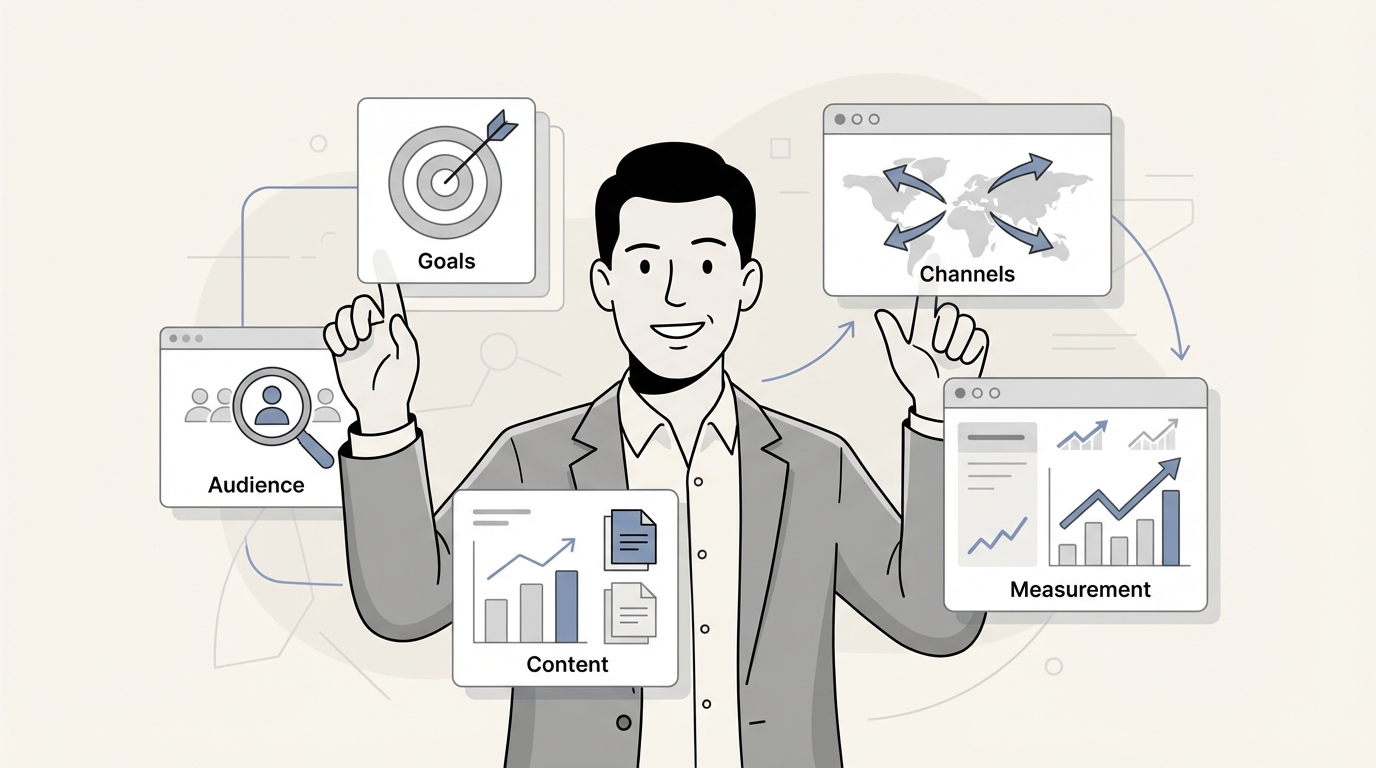
Theory is useful. Implementation drives results. Here’s a practical framework for optimizing your site for AI search visibility.
Step 1: Enable AI crawler access
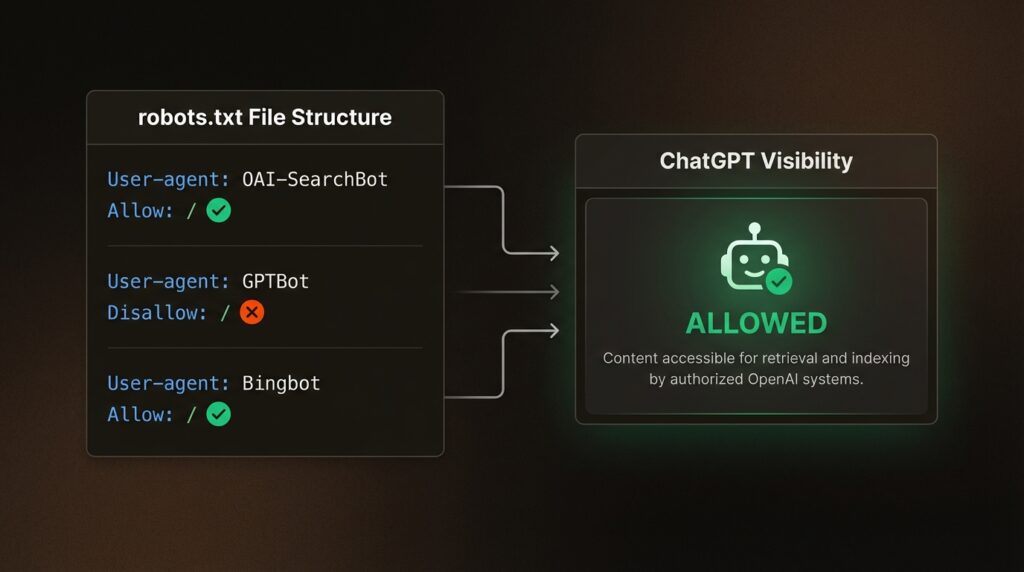
Before ChatGPT can cite your content, its crawlers must access it. OpenAI uses three distinct user agents. For a complete list of AI crawlers and their purposes, see our AI crawler reference guide:
| Bot | Purpose | robots.txt Control |
|---|---|---|
| OAI-SearchBot | Search results in ChatGPT | User-agent: OAI-SearchBotAllow: / |
| GPTBot | Training generative AI models | User-agent: GPTBotAllow: / or Disallow: / |
| ChatGPT-User | User-initiated browsing | User actions (not crawl-based) |
Critical distinction: OAI-SearchBot and GPTBot are controlled independently. You can allow your content to appear in search while opting out of training data usage. Changes to robots.txt take approximately 24 hours to propagate.
Also verify that Bingbot has access, since SearchGPT relies on Bing’s index.
Step 2: Structure content for conversational queries
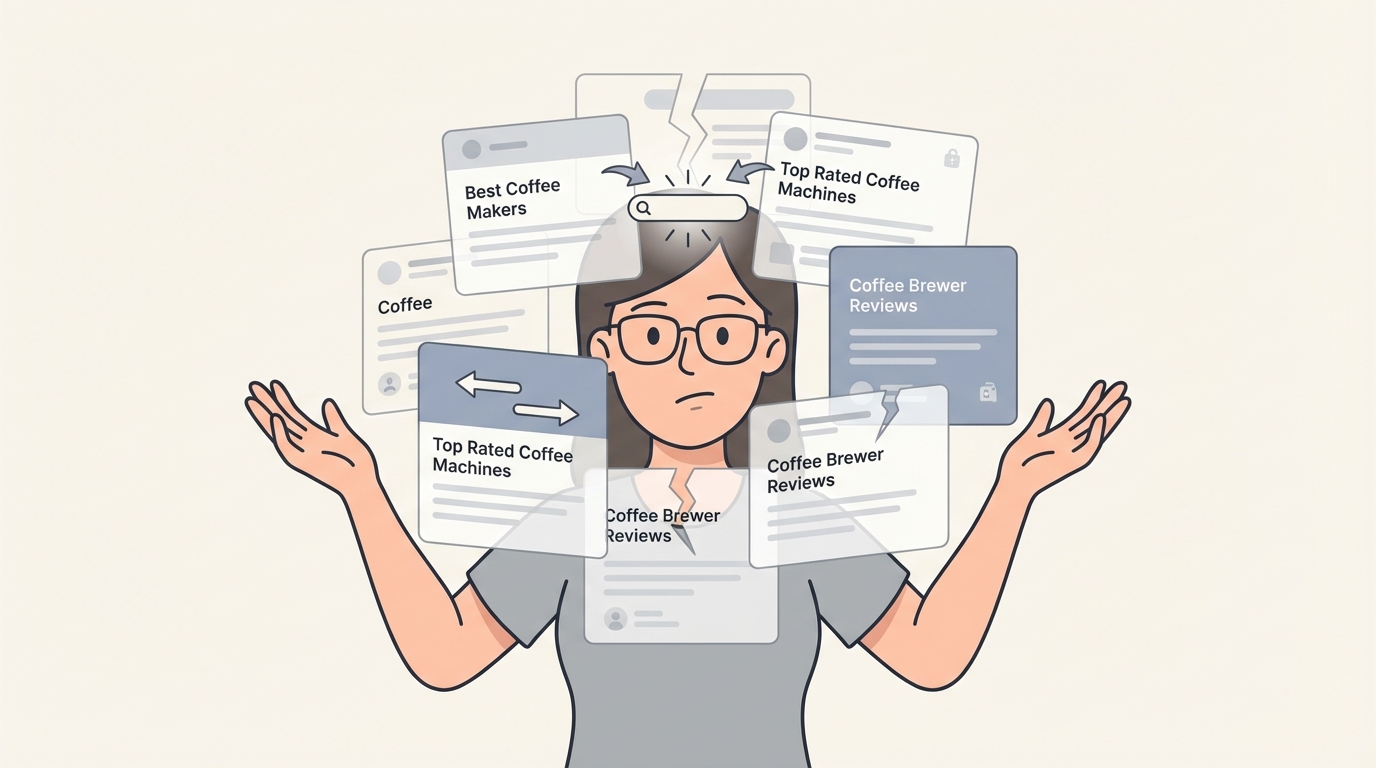
People interact with ChatGPT conversationally. They ask full questions, not keyword fragments. Your content should match this pattern.
Effective approaches:
- Q&A format. Structure content as questions and answers. This mirrors how users query AI and how AI extracts information.
- FAQ schema markup. Implement FAQPage schema to help AI systems understand your question-answer content.
- Natural language. Write the way people speak. Avoid keyword stuffing. Focus on clarity and completeness.
Example transformation:
- Keyword-focused: “Best CRM software 2026 features comparison”
- Conversation-optimized: “What are the most important features to look for when choosing CRM software?”
Step 3: Build topical authority
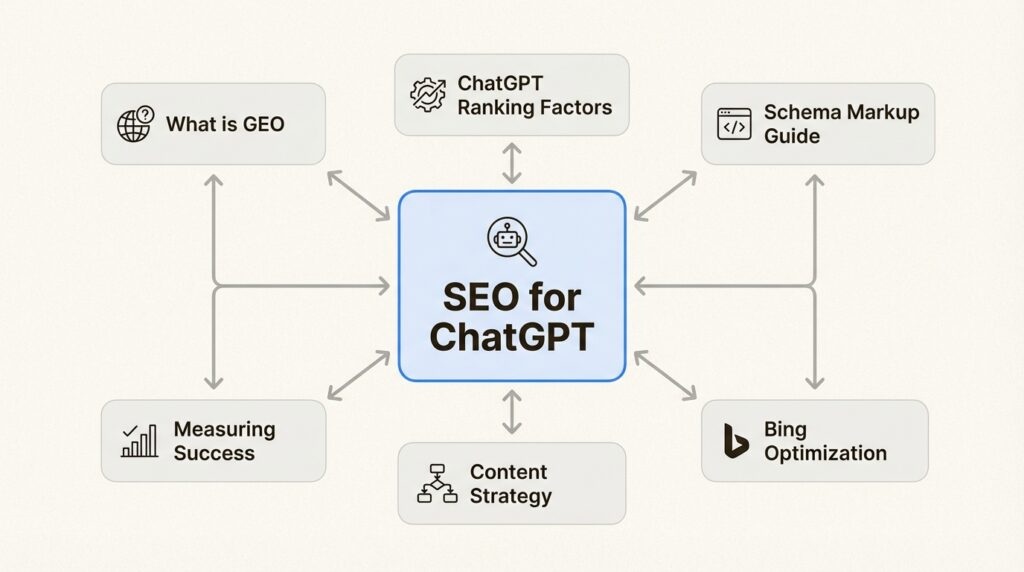
AI systems prefer comprehensive sources. Instead of scattered posts on related topics, create content clusters that cover subjects thoroughly.
A topical authority approach:
- Create a pillar page covering a broad topic comprehensively
- Develop cluster content addressing specific subtopics
- Link cluster content to the pillar and vice versa
- Update and expand the cluster over time
This signals to AI systems (and traditional search engines) that you’re a go-to resource for your subject matter.
Step 4: Optimize for E-E-A-T
Every piece of content should demonstrate expertise and trustworthiness:
- Include author bios with relevant credentials
- Cite authoritative sources with links
- Share original research, case studies, or first-hand experience
- Keep content updated with current information
- Be transparent about your organization and expertise
Step 5: Implement schema markup
Structured data helps AI systems understand your content’s context and relationships. Priority schema types for GEO:
| Schema Type | Purpose | Priority |
|---|---|---|
| FAQPage | Question-answer content | High |
| HowTo | Step-by-step instructions | High |
| Article | Blog posts and articles | Medium |
| Organization | Company information | Medium |
| Author | Content creator details | Medium |
Schema markup doesn’t guarantee AI citations, but it improves the odds by making your content structure explicit and machine-readable.
Measuring your ChatGPT SEO success
AI search analytics is still emerging. There aren’t yet robust tools for tracking AI citations at scale. But you can monitor key indicators. Our AI brand visibility tracker can help you monitor how your brand appears across AI platforms:
Manual brand mention tracking:Periodically search your brand name in ChatGPT. Note when and how you’re cited. Track which pages or content get referenced most often. You can also use our ChatGPT visibility tracker to streamline this process.
Referral traffic analysis:Monitor analytics for traffic from chat.openai.com. While direct attribution is limited, meaningful referral traffic indicates AI visibility.
Bing visibility as proxy:Since SearchGPT uses Bing’s index, your Bing rankings predict your ChatGPT potential. Track Bing Search Console data alongside traditional Google metrics.
Featured snippet ownership:Content that wins featured snippets in traditional search often performs well in AI citations. Both reward clear, authoritative answers.
The measurement landscape will mature. Early movers who establish citation patterns now will have data advantages as analytics tools improve. For more details, see our guide on how to track AI visibility.
The future of SEO in an AI-first world
Where is this heading? The convergence of SEO, GEO, and AEO (Answer Engine Optimization) is already underway. The distinctions between optimizing for Google, ChatGPT, and voice assistants are blurring. What works for one increasingly works for all.
Key trends to watch:
- Multimodal search. Text, voice, and visual search are converging. Optimization strategies must account for all three.
- Direct answers. Both Google and AI platforms are moving toward answering queries without clicks. Visibility in these answers becomes the new goal.
- Citation economics. As AI platforms drive traffic, the value of being cited increases. Expect more sophisticated strategies for earning and tracking citations.
Traditional SEO isn’t dead. It’s the foundation. GEO extends it. The businesses that master both will dominate the next decade of search.
At Decoding, we’ve spent 16 years helping businesses navigate search evolution. From the early days of keyword stuffing to the complexity of modern technical SEO, we’ve adapted as the landscape changed. The shift to AI search is the biggest change yet. But the fundamentals remain: create genuinely useful content, make it technically accessible, and earn recognition from authoritative sources.
Start optimizing for AI search today
The window for early advantage is closing. Every day, more businesses recognize AI search as a priority. The citation patterns that determine visibility are being established now.
Your action plan:
- Verify OAI-SearchBot and Bingbot can crawl your site
- Submit your sitemap to Bing Webmaster Tools
- Audit your content for conversational query optimization
- Implement FAQ and HowTo schema on relevant pages
- Build topical authority through comprehensive content clusters
- Establish E-E-A-T signals with author bios and citations
This isn’t about chasing the latest trend. It’s about positioning your business for where search is heading, not where it’s been.
At Decoding, we don’t do templates. We don’t deliver 50-page reports that sit unread. We build custom SEO strategies based on your business, your customers, and your goals. Then we create actionable roadmaps that drive measurable results.
If you’re ready to optimize for the AI search era, contact us for a custom AI visibility audit. We’ll analyze your current position, identify opportunities, and build a strategy that puts you ahead of the curve.
Frequently Asked Questions
How is SEO for ChatGPT different from traditional Google SEO?
Traditional SEO focuses on ranking in search engine results pages through keywords, backlinks, and technical optimization. SEO for ChatGPT (GEO) focuses on being cited as a source in AI-generated responses. While both require quality content, GEO emphasizes conversational query matching, clear citation structures, and brand authority signals across the web.
Do I need to choose between optimizing for Google or ChatGPT?
No. The strategies complement each other. Strong E-E-A-T signals, quality content, and technical foundations benefit both. Bing optimization (critical for ChatGPT) also improves your Microsoft search visibility. The investment in GEO extends your traditional SEO rather than replacing it.
How long does it take to see results from ChatGPT SEO efforts?
Initial indexing changes (robots.txt updates, sitemap submissions) take effect within 24-48 hours. Content optimization results vary based on your site’s existing authority and the competitiveness of your topics. Most businesses see measurable changes in 6-10 weeks, with compounding benefits as AI systems learn to trust your content.
Can I prevent ChatGPT from using my content while still appearing in search results?
Yes. OpenAI allows independent control of OAI-SearchBot (search visibility) and GPTBot (training data usage) through robots.txt. You can allow OAI-SearchBot to appear in ChatGPT search results while disallowing GPTBot to prevent your content from being used in training generative AI models.
What types of content perform best for ChatGPT citations?
Content that directly answers specific questions performs best. FAQ pages, how-to guides, comprehensive explainers, and original research all earn citations. The key is clarity, accuracy, and proper schema markup that helps AI systems understand your content structure.
How do I track if ChatGPT is citing my website?
Currently, tracking requires manual monitoring. Search your brand and key topics in ChatGPT periodically. Monitor referral traffic from chat.openai.com in your analytics. Watch for mentions in Bing Search Console (since SearchGPT uses Bing’s index). As the ecosystem matures, more sophisticated tracking tools will become available.





Leave a Reply