

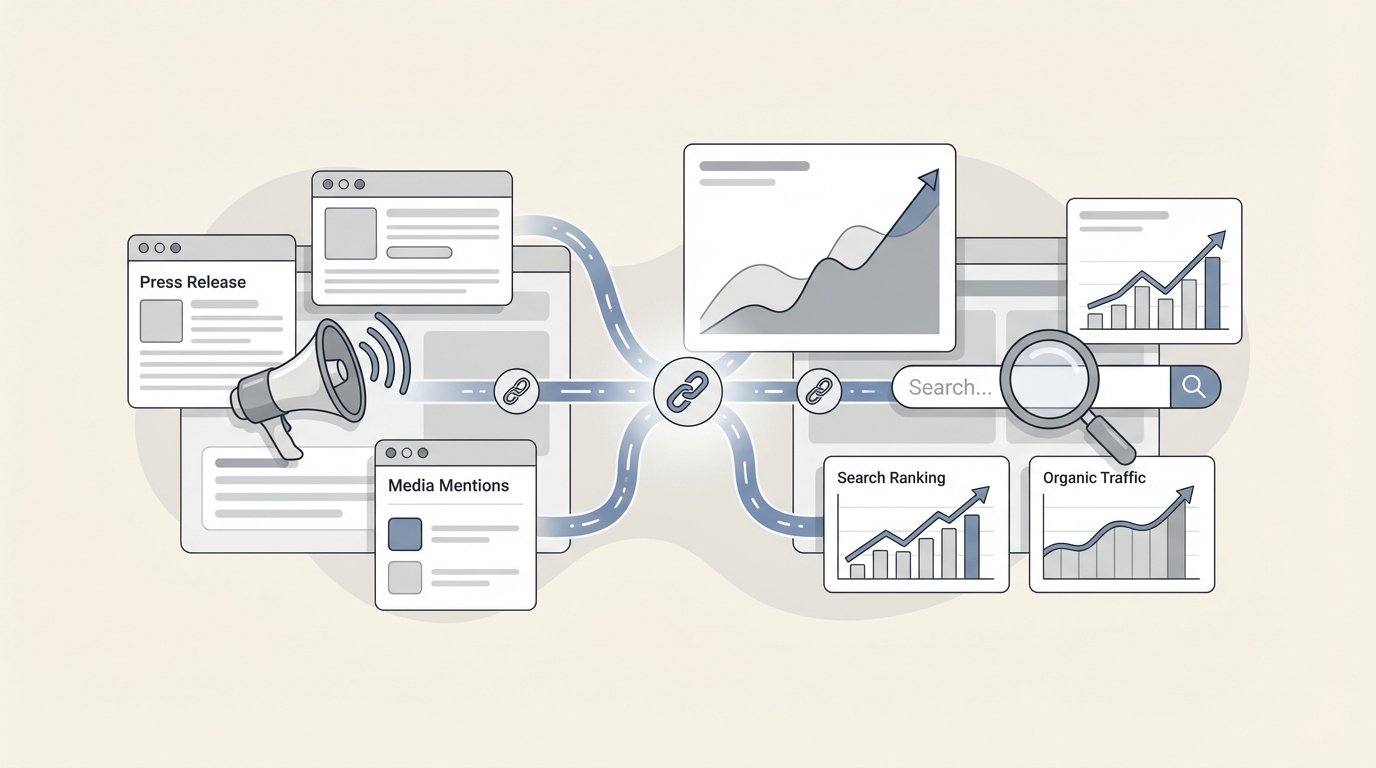
Here’s something most PR professionals don’t realize: every press hit, media mention, and brand story you secure could be boosting your company’s search rankings. Not might. Could. The gap between PR and SEO isn’t just a missed opportunity, it’s a strategic blind spot that costs brands visibility every single day.
PR and SEO aren’t separate disciplines. They’re two sides of the same visibility coin. While you’re pitching journalists and crafting narratives, SEO teams are chasing the exact same outcomes: authority, trust, and discoverability. The difference? PR professionals are sitting on the very assets SEOs spend months trying to build.
In this guide, we’ll break down exactly how your PR work impacts search rankings, the specific tactics you can implement immediately, and why the rise of AI search makes PR more critical than ever.
How PR directly impacts your search rankings
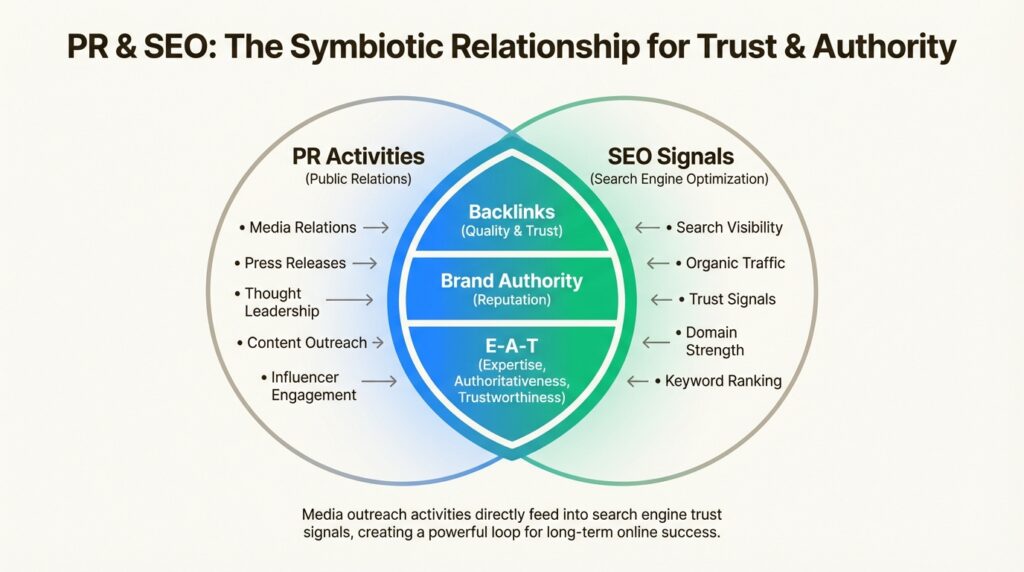
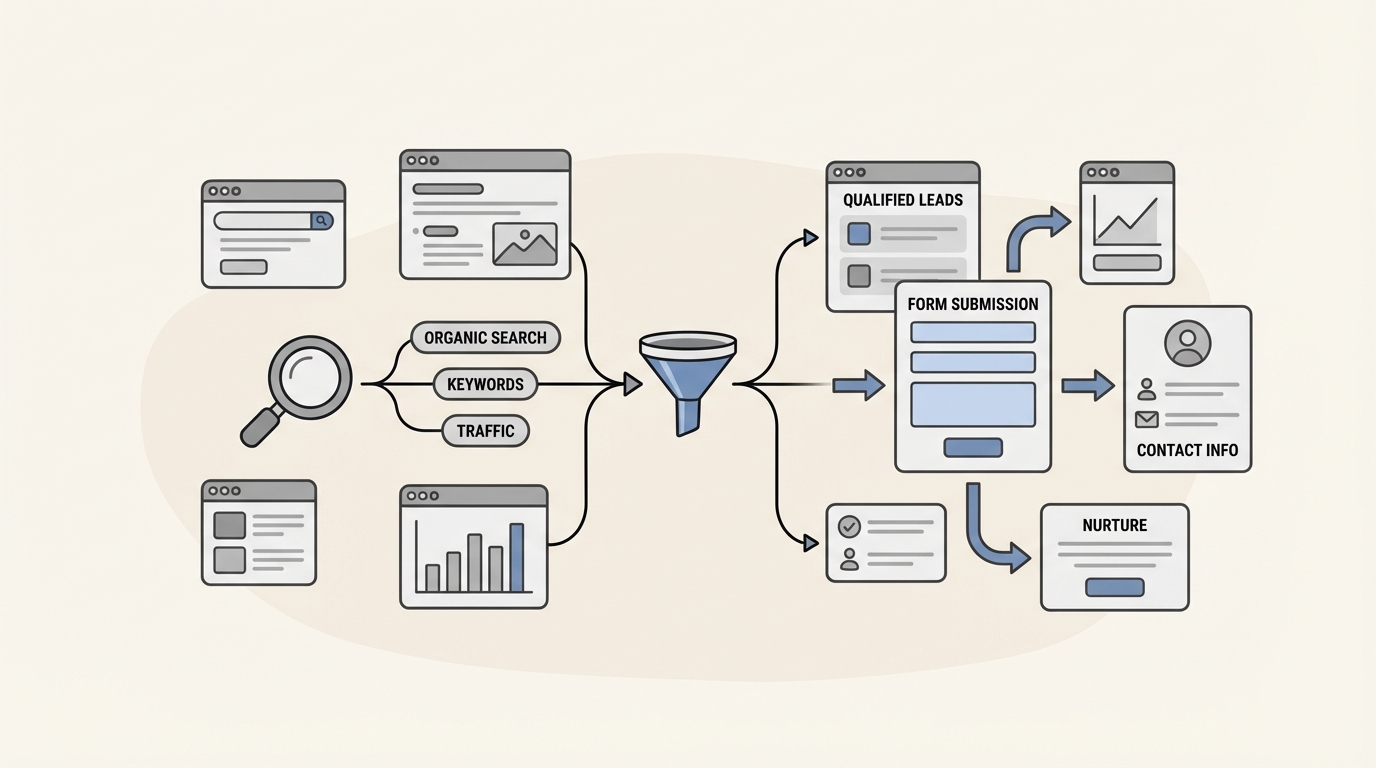
Let’s get specific about the mechanisms. PR affects SEO through three primary channels: backlinks, brand signals, and E-A-T validation.
Backlinks: The currency of search authority
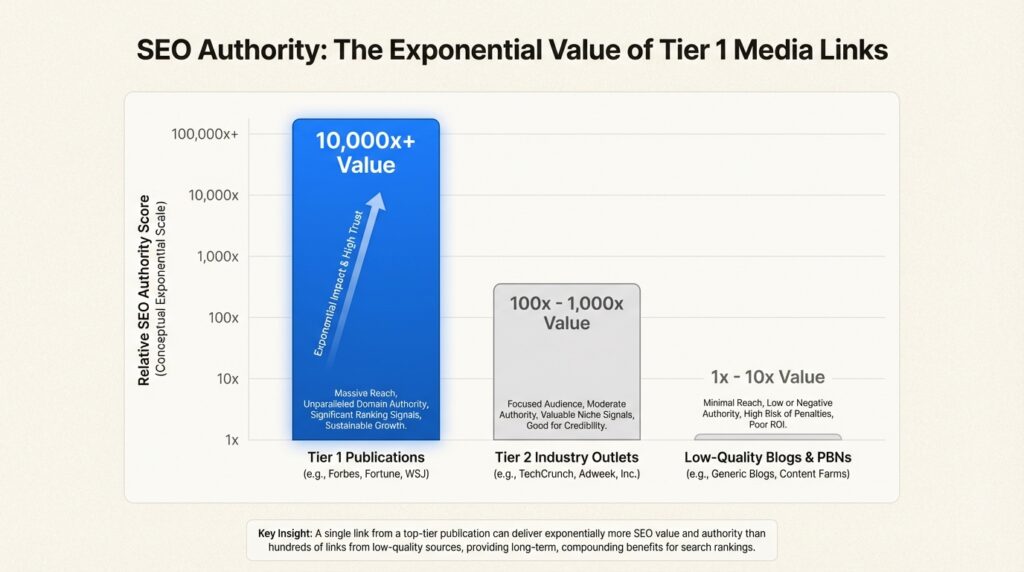
Not all backlinks are created equal. A link from a high-authority news site carries exponentially more weight than a link from a random blog. Google uses domain authority as a proxy for trust. When the New York Times links to your site, Google sees that as an endorsement.
PR-generated backlinks outperform outreach links for several reasons:
- Editorial context: Links within journalistic content carry more weight than directory listings or guest posts
- Relevance: Industry-specific publications signal topical authority to search engines
- Placement: Links in the body of an article matter more than footer or sidebar links
The tier system matters here. Tier 1 publications (Forbes, Fortune, FastCompany, major national outlets) deliver maximum authority. Tier 2 publications (industry-specific outlets like PrintWeek for printing companies or TechCrunch for startups) provide targeted relevance. A common misconception is that quantity beats quality. It doesn’t. Ten links from tier 1 and tier 2 publications will outperform hundreds of low-quality links.
The compounding effect is real. As your domain authority increases, every page on your site benefits. That press release from six months ago? It’s still passing authority to your homepage, your product pages, your blog posts. PR backlinks are assets that appreciate over time.
Brand signals and click-through rates
Here’s a statistic that should change how you think about PR: studies have shown that brand awareness significantly improves click-through rates in search results. When searchers recognize your brand name, they’re more likely to click. It’s familiarity bias in action.
This matters because CTR is a ranking signal. When users consistently choose your result over higher-ranked competitors, Google notices. The algorithm interprets high CTR as a sign that your content satisfies search intent.
Media coverage creates this recognition. When someone sees your brand featured in a publication they trust, that trust transfers to search results. They’re more likely to click your link instead of a competitor’s, even if you rank lower.
There’s also the branded search volume indicator. Google tracks how many people search specifically for your brand name. This is one of the purest measures of brand awareness available. More branded searches signal to Google that your brand is significant in your market. PR drives these searches by putting your name in front of new audiences.
E-A-T and reputation management
Google’s quality rater guidelines explicitly instruct human reviewers to assess Expertise, Authority, and Trustworthiness. While these ratings don’t directly affect rankings, they reflect what Google’s algorithm attempts to measure algorithmically.
Media mentions serve as third-party credibility signals. When independent journalists choose to cover your brand, they’re vouching for your relevance and authority. This is particularly important for YMYL (Your Money or Your Life) topics like finance, health, and legal services, where Google applies stricter quality standards.
PR also plays a critical role in reputation SEO. When someone searches for your brand, what do they find? Ideally, a mix of your owned properties and positive media coverage. PR helps ensure that the first page of results tells the story you want told. This is reputation management at the search level.
Actionable SEO tactics for PR professionals
Understanding the theory is useful. Implementing tactics is what drives results. Here are specific actions PR professionals can take to maximize SEO impact.
Keyword research for PR campaigns
SEO data should inform your media pitches and story angles. Before pitching a topic, research what your audience is actually searching for. Tools like Google Keyword Planner, Semrush, and Ahrefs reveal search volume, competition, and related terms.
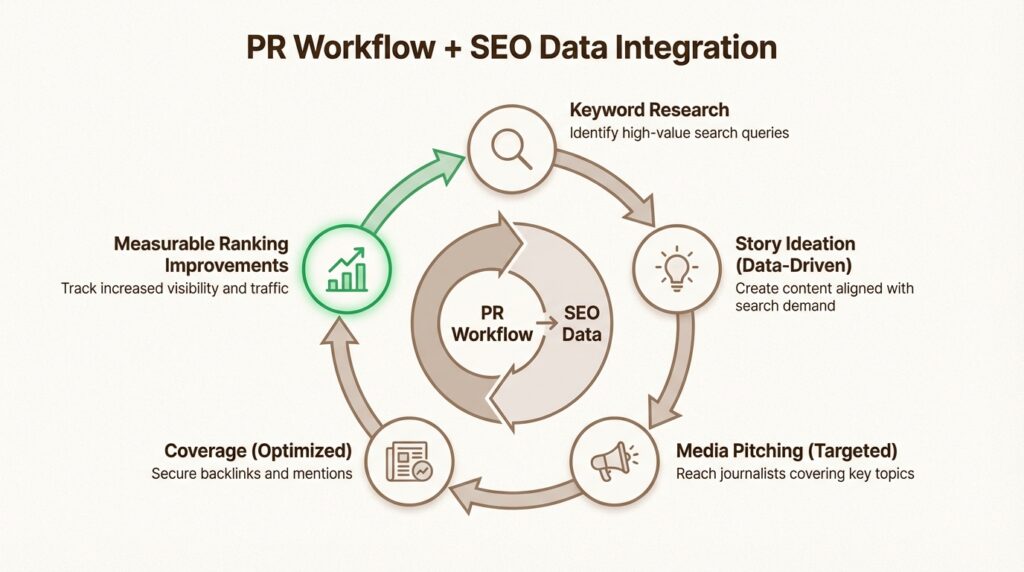
This research helps you:
- Identify newsworthy topics that audiences are actively searching for
- Craft headlines using language your audience actually uses
- Position stories around trending search terms
- Test messaging through search-optimized content before pitching
The integration works both ways. PR teams can use keyword research to validate story angles, while SEO teams can use PR placements to build authority for priority keywords.
Optimizing press releases for search
Press releases can draw significant search traffic when optimized correctly. Here’s how to do it:
Keyword placement: Incorporate your target keyword naturally into the headline, subheadings, and body text. Aim for a keyword density of 1-2%. Use related terms and synonyms (LSI keywords) to help search engines understand context. For example, if your keyword is “sustainable packaging,” include terms like “eco-friendly materials” and “biodegradable solutions.”
Headline optimization: Keep headlines under 70 characters to ensure they display fully in search results. Write for humans first, but include your primary keyword near the beginning.
Anchor text: When including links, use descriptive anchor text. “Read our sustainability report” is better than “click here.” Search engines use anchor text to understand what the linked page is about.
Image optimization: Use descriptive file names with hyphens (not underscores). “sustainable-packaging-report-2026.jpg” is better than “IMG_1234.jpg”. Include alt text that describes the image and incorporates keywords naturally.
Multimedia inclusion: Videos, infographics, and data visualizations increase engagement and dwell time, both positive SEO signals. Host videos on YouTube or Vimeo and embed them in the release.
Maximizing earned media SEO value
Securing coverage is only half the battle. Here’s how to ensure that coverage delivers maximum SEO value:
Ask for backlinks: When pitching, explicitly request that journalists include a link to your website. The best time to ask is before publication, not after. Include the desired link in your pitch materials so it’s easy for journalists to copy.
Strategic link targets: Don’t just point links to your homepage. Consider linking to:
- Product pages for specific announcements
- Research or data pages that support your pitch
- Author bio pages for thought leadership pieces
- Campaign landing pages
Follow up on unlinked mentions: If a publication mentions your brand without linking, a polite follow-up requesting a link can be effective. Tools like Brand24 or Mention help track these opportunities.
Coordinate with SEO teams: Share your media calendar with the SEO team so they can prepare for referral traffic spikes and track ranking changes. SEO teams can also provide guidance on which pages need authority most.
Newsjacking for search visibility
Newsjacking is the practice of injecting your brand into breaking news stories. When done well, it can capture significant search traffic during traffic spikes.
The key is speed. When a topic suddenly trends, search volume explodes. The first brands to publish relevant content often capture the top rankings. PR and SEO teams should collaborate to:
- Monitor trending topics in real-time
- Identify angles where your brand has legitimate expertise
- Publish optimized content quickly while interest is high
- Promote that content through PR channels
One effective example: when COVID-19 drove massive search interest in remote work, a company that measured environmental footprints published an analysis of face mask environmental impact. They captured tens of thousands of clicks by moving fast on a trending topic.
The AI shift: Why PR matters more for AI visibility than traditional SEO
The search landscape is undergoing its biggest transformation since Google launched. AI answer engines like ChatGPT, Perplexity, and Claude don’t just index pages and rank them. They synthesize information from multiple sources to generate answers.
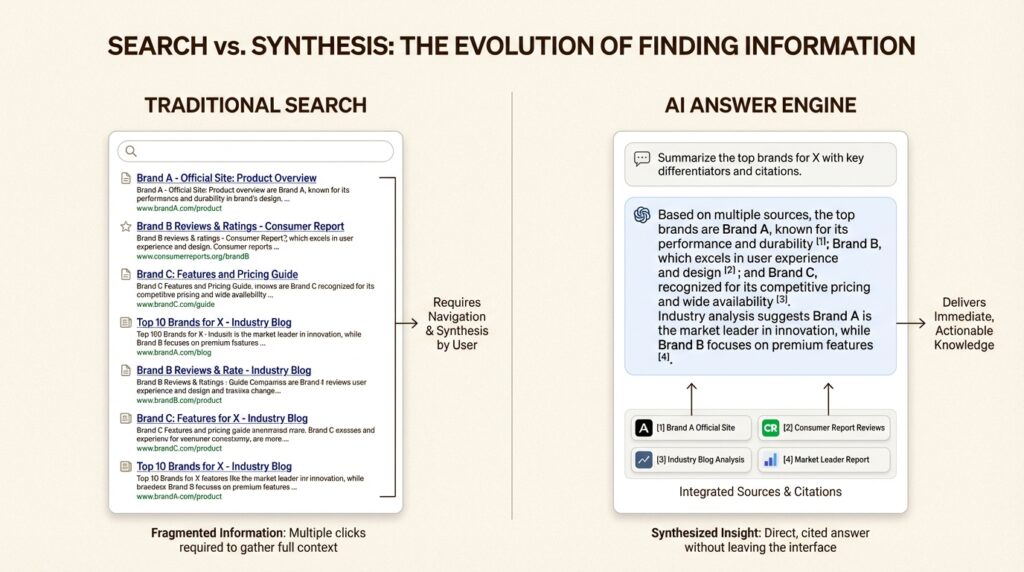
This changes everything about how brands get discovered.
In traditional search, the goal was to rank #1 for specific keywords. In AI search, the goal is to be cited as a source in generated responses. The mechanics are different, but the underlying principle is the same: authority and credibility determine visibility.
Here’s why PR matters even more in the AI era:
Citation-based visibility: AI systems cite their sources. When ChatGPT recommends a solution, it often mentions specific brands. Those mentions come from the training data, which heavily weights authoritative publications. PR placements in reputable outlets increase your likelihood of being cited by AI systems.
Synthesized authority: AI doesn’t just count backlinks. It understands context and relationships. When your brand is mentioned across multiple authoritative sources, AI systems recognize that pattern as a signal of significance.
The trust transfer: Just as readers transfer trust from publications to brands, AI systems transfer authority from training sources to cited brands. A mention in the Wall Street Journal carries weight in both human and algorithmic contexts.
This is the evolution from SEO to AEO: Answer Engine Optimization. The fundamentals remain (authority, relevance, trust), but the application changes. PR professionals who understand this shift will be essential to brand visibility in the coming years.
At Decoding, we’ve built an AI visibility tracking platform specifically for this transition. We help brands understand how they appear inside ChatGPT and other AI systems, not just traditional search rankings. The data is clear: brands with strong PR presence perform better in AI citations.
Measuring PR’s impact on search performance
What gets measured gets managed. Here are the key metrics for tracking how PR affects SEO:
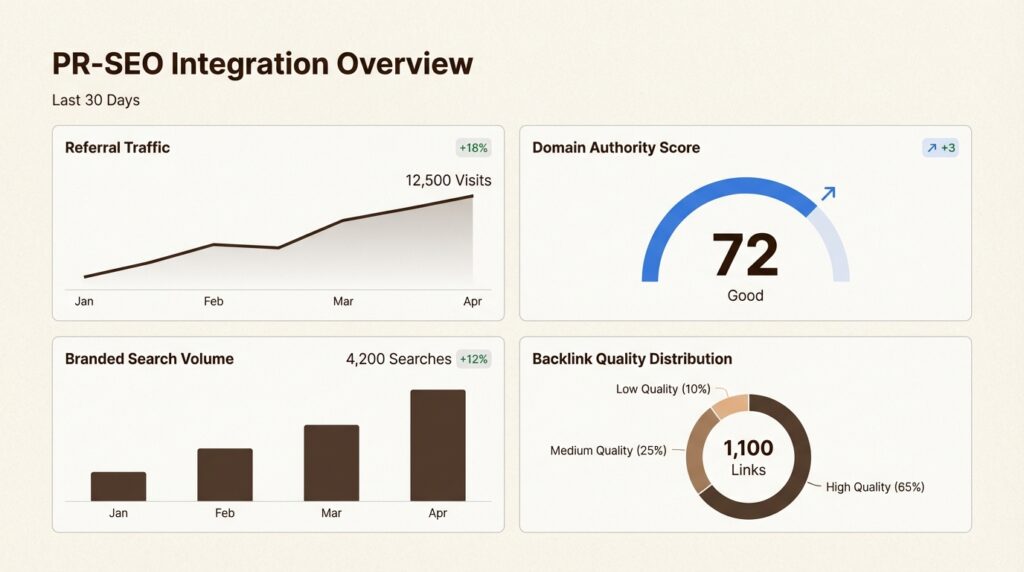
Referral traffic: Use Google Analytics to track visitors coming directly from media placements. This shows immediate impact and helps identify which publications drive quality traffic.
Domain authority: Tools like Ahrefs and Semrush track your site’s authority score over time. Watch for increases following major PR campaigns. These scores correlate strongly with ranking potential.
Brand search volume: Google Search Console shows how many people search specifically for your brand name. Increasing branded searches indicate growing awareness from PR efforts.
Ranking improvements: Track target keyword positions before and after PR campaigns. High-authority backlinks often produce ranking improvements within weeks.
Backlink quantity and quality: Monitor new referring domains and their authority scores. Focus on the quality distribution, not just total count.
Media mentions: Tools like Brand24 and Mention track brand references across the web, including unlinked mentions that represent link building opportunities.
Attribution challenges: Connecting PR to SEO outcomes isn’t always straightforward. A placement might not drive immediate rankings but contributes to long-term authority. Build a dashboard that tracks these metrics over time to identify patterns.
Getting started: Your PR-SEO integration roadmap
Ready to integrate PR and SEO? Here’s a practical roadmap:
Step 1: Audit current PR content for SEO opportunitiesReview recent press releases, media placements, and brand mentions. Identify unlinked mentions that could become backlinks. Check if existing content targets relevant keywords.
Step 2: Establish keyword priorities aligned with PR messagingWork with your SEO team (or use keyword research tools) to identify high-value keywords that align with your PR themes. These should inform your pitching strategy.
Step 3: Create collaboration workflows between PR and SEO teamsSet up regular check-ins to share calendars, discuss upcoming campaigns, and coordinate on link targets. The most successful integrations treat PR and SEO as a unified function.
Step 4: Implement tracking for PR-driven SEO metricsSet up dashboards to monitor the metrics outlined above. Establish baselines before major campaigns so you can measure impact.
Step 5: Iterate based on data and resultsReview what’s working and what isn’t. Double down on tactics that drive results. Cut approaches that don’t deliver.
Common pitfalls to avoid:
- Chasing quantity over quality in backlinks
- Optimizing press releases to the point of unreadability
- Ignoring unlinked brand mentions
- Failing to coordinate between PR and SEO teams
- Measuring only short-term metrics
Start amplifying your PR impact on search today
PR and SEO are force multipliers. When they work together, each discipline amplifies the other. PR generates the authority and citations that SEO needs. SEO ensures that PR-driven awareness converts into discoverable, measurable traffic.
The urgency is real. Search is evolving faster than most organizations can adapt. PR professionals who understand SEO, and SEO professionals who understand PR, will lead the next era of digital visibility. Those who treat them as separate disciplines will fall behind.
At Decoding, we help SMBs and agencies navigate this transition. We don’t do templates. We don’t deliver 50-page reports that sit unread. We build custom SEO strategies focused on ROI, with actionable roadmaps that your team can execute immediately.
Our approach combines 16 years of technical SEO expertise with proprietary AI visibility tracking. We help you dominate Google today and prepare for the AI search landscape of tomorrow.
Ready to amplify your PR impact on search? Let’s talk about how Decoding can help you build a visibility strategy that works across every search platform, traditional and AI-powered alike.
Frequently Asked Questions
How long does it take to see SEO results from PR efforts?
Backlinks from PR placements typically start affecting rankings within 2-4 weeks, though significant domain authority improvements can take 3-6 months of consistent effort. Brand awareness effects on CTR can be observed sooner through Google Search Console data.
Should PR professionals learn technical SEO, or should SEO teams handle that?
PR professionals don’t need to become technical SEO experts, but understanding the fundamentals (keywords, backlinks, E-A-T) makes them far more effective. The best results come from collaboration, where PR brings media relationships and storytelling, while SEO brings technical optimization and measurement.
What’s the most common mistake PR teams make with SEO?
The biggest mistake is treating SEO as an afterthought. Press releases written without keyword research, pitches that don’t consider link targets, and campaigns that aren’t measured for search impact all represent missed opportunities. Integrate SEO thinking from the planning stage.
How do I convince journalists to include backlinks?
Make it easy. Include the link in your pitch materials, explain why it adds value for readers (not just for your SEO), and ask early in the process. Journalists are more likely to edit links before publication than after. Building genuine relationships also helps, reporters are more accommodating with sources they trust.
Can small PR teams compete with enterprise budgets for SEO impact?
Absolutely. Quality consistently beats quantity in backlinks. A small team that secures placements in tier 1 and tier 2 publications will outperform a large team generating hundreds of low-quality links. Focus on relevance, authority, and relationship building rather than volume.
How is AI search changing the relationship between PR and SEO?
AI search engines synthesize information from multiple sources rather than ranking individual pages. This makes brand mentions and citations in authoritative sources even more valuable. PR professionals who understand how AI systems source information will be essential to brand visibility in the coming years.







Leave a Reply