

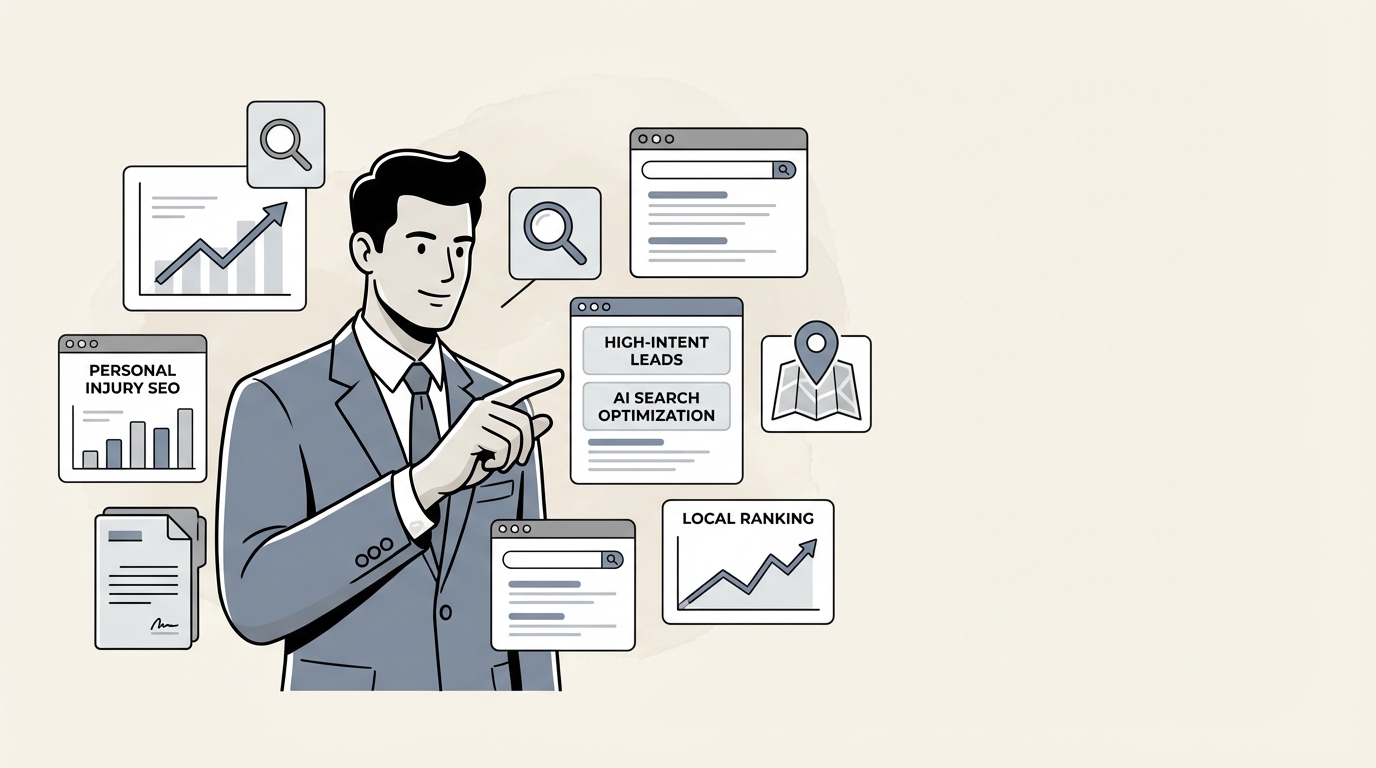
Personal injury law is one of the most competitive digital marketing niches in existence. With a single qualified lead potentially worth tens of thousands of dollars in fees, law firms pour significant resources into capturing online visibility. But here’s the reality: 95% of potential clients use search engines to find lawyers, and if your firm isn’t on page one, you might as well be invisible.
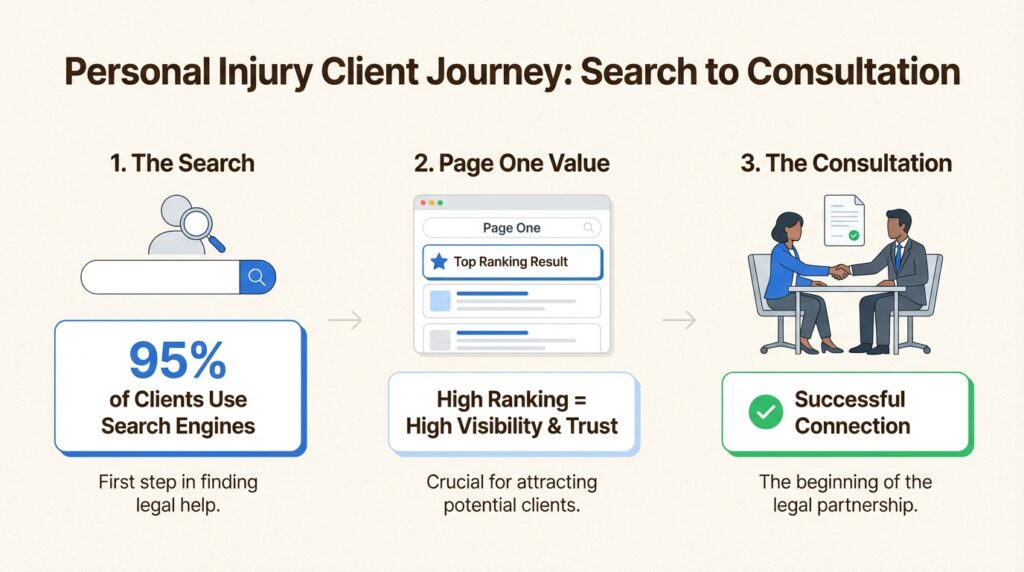
The good news? Most personal injury lawyers are making the same mistakes. They’re targeting overly broad keywords, neglecting their Google Business Profile, and completely ignoring the shift toward AI search. This guide covers what actually works in 2026: a dual-track approach combining proven traditional SEO with emerging AI search optimization (GEO/AEO) strategies.
At Decoding, we’ve spent 16 years helping law firms dominate search results. This guide distills what we’ve learned about SEO for personal injury lawyers into actionable strategies you can implement today.
What is SEO for personal injury lawyers?
SEO for personal injury lawyers is the practice of optimizing your law firm’s online presence to rank higher in search engine results when potential clients search for legal services. But it’s more nuanced than general SEO because personal injury law has unique characteristics that demand a specialized approach.
First, the stakes are high. Personal injury clients are often dealing with trauma, medical bills, and financial uncertainty. They’re not browsing. They’re searching with urgent intent to hire an attorney who can help them navigate a crisis. This means your content needs to balance authority with empathy.
Second, the competition is extreme. In major metropolitan areas, hundreds of firms may be competing for the same keywords. The firms that win aren’t necessarily the biggest. They’re the ones that understand how to target high-intent keywords, optimize for local search, and build genuine authority through content and backlinks.
Finally, the landscape is shifting. Traditional Google rankings still matter, but AI search platforms like ChatGPT and Perplexity are increasingly where potential clients start their research. Our approach at Decoding emphasizes both tracks: traditional SEO for Google dominance and AI search optimization for the emerging AI ecosystem. For a broader legal SEO perspective, see our guide on SEO for lawyers.
Why local SEO matters most for personal injury attorneys
If you only focus on one aspect of SEO, make it local optimization. Here’s why: personal injury clients want local representation. They need to meet with their attorney, attend depositions, and potentially go to court. A firm in their city isn’t just convenient. It’s necessary.
Google Business Profile optimization
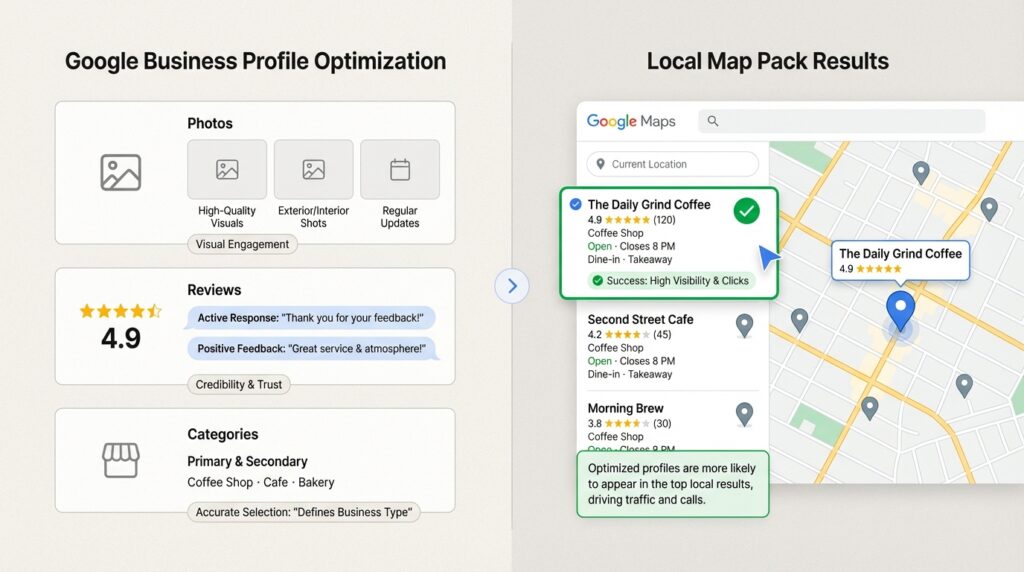
Your Google Business Profile (GBP) is the foundation of local SEO for personal injury lawyers. It’s what appears in the local map pack (those three business listings above organic results) and on Google Maps. According to First Page Sage research, the local pack gets more clicks than almost anything else for location-based searches.
Here’s how to optimize it:
- Complete every section. This includes business hours, services, photos, and a detailed description using relevant keywords naturally.
- Choose the right categories. Your primary category should be “Personal Injury Attorney.” Add secondary categories based on your practice areas: “Car Accident Attorney,” “Medical Malpractice Attorney,” “Workers’ Compensation Attorney.”
- Use real photos. Profiles with authentic office and team photos get 35% more clicks than those using stock photography. Google can distinguish between real photos and stock images.
- Post regularly. Weekly updates about legal topics, case results (where ethically permitted), and community involvement signal to Google that your business is active.
Reviews are arguably the most important ranking factor for local SEO. Google reviews directly impact your map pack position. More positive reviews improve rankings, and review velocity (new reviews coming in regularly) matters as much as total count.
The best time to request a review? Within 48 hours of case resolution, when the client is satisfied and holding their settlement check. Send a text message with a direct review link. Most clients will leave positive feedback if you make it simple and ask at the right moment.
NAP consistency across the web
NAP stands for Name, Address, Phone number. Consistency is critical. Your NAP must be identical across every platform where your firm appears:
- Your website (both visible text and schema markup)
- Google Business Profile
- Legal directories: Avvo, Justia, FindLaw, Martindale-Hubbell
- General directories: Yelp, Yellow Pages, Better Business Bureau
- State bar directory
- Local chamber of commerce
Even small variations hurt your rankings. “Street” versus “St.” versus “St” can confuse search engines. “Smith & Associates” versus “Smith and Associates LLC” creates fragmentation. Audit your listings regularly to ensure perfect consistency.
For firms serious about local dominance, our local SEO services include comprehensive citation management and ongoing GBP optimization.
Keyword strategy for high-intent personal injury leads
Most personal injury lawyers make a critical mistake with keyword research: they target overly broad terms like “personal injury lawyer” and wonder why they can’t rank. These keywords have massive search volume but are nearly impossible to win unless you’re a national firm with years of authority building.
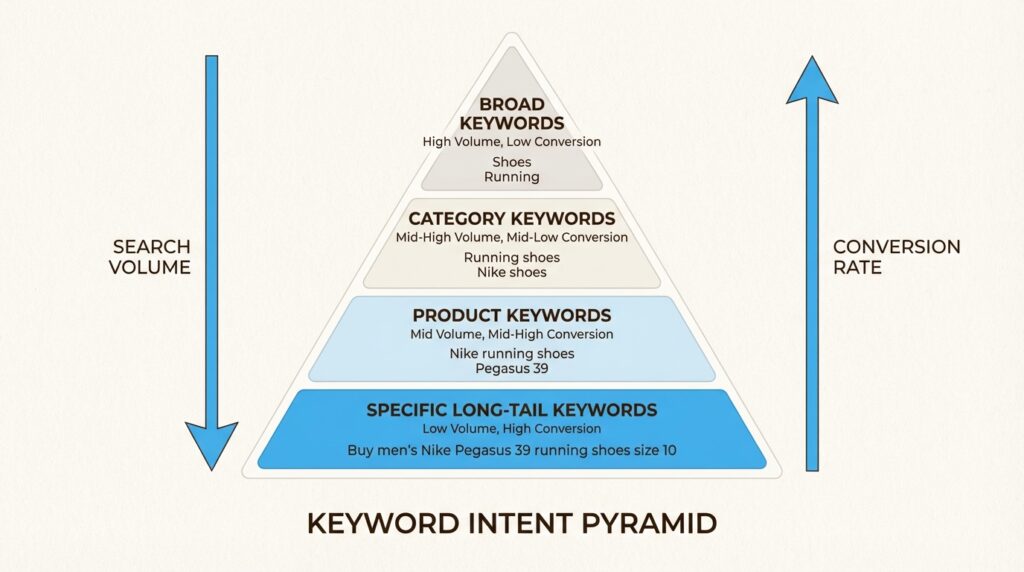
Worse, broad keywords don’t represent hiring intent. Much of that traffic comes from researchers, law students, other attorneys tracking rankings, or people casually educating themselves. They are not looking to call a lawyer today.
High-intent keyword patterns that convert
The keywords that actually drive consultations follow specific patterns:
- “[Injury type] lawyer [city]” “car accident lawyer Miami,” “slip and fall attorney Denver”
- “[Injury type] attorney near me” captures mobile searches with immediate intent
- “[Specific situation] lawyer [city]” “truck accident attorney Chicago,” “motorcycle accident lawyer Austin”
These keywords show the searcher knows exactly what happened and what they need. They aren’t researching. They’re looking to hire.
Niche practice area opportunities
More specific case types mean less competition and higher intent. Consider targeting:
- Bicycle accidents
- Construction injuries
- Rideshare crashes (Uber/Lyft)
- Dog bites
- Medical malpractice subspecialties
- Product liability
A Chicago firm might struggle to rank for “personal injury lawyer Chicago,” but they can dominate “Chicago bicycle accident attorney” or “Lincoln Park truck accident lawyer.” The volume is lower, but the conversion rate is much higher.
Long-tail informational queries
Not every piece of content needs to convert immediately. Informational content builds authority and captures potential clients earlier in their decision process:
- “What to do after a car accident”
- “How long do I have to file a personal injury claim”
- “Average settlement for slip and fall”
- “What if I’m partly at fault for the accident”
These pages build domain authority and increasingly get cited by AI overviews and ChatGPT responses. For more on how AI is changing search behavior, see our analysis of SEO statistics and AI search trends.
Content marketing that converts injured clients
Personal injury clients are different from other legal consumers. They’re often experiencing trauma, dealing with physical pain, and facing financial uncertainty. Your content needs to acknowledge this reality.
The trauma-informed approach
Traditional marketing advice might suggest aggressive sales language, bold designs, and prominent “contact us” buttons. For personal injury lawyers, this approach can backfire. Your prospective clients are scared and vulnerable. They respond better to a gentler approach that inspires trust.
Content that works for personal injury audiences includes:
- Client testimonials that humanize your firm (with proper disclaimers)
- Helpful tips that demonstrate expertise without demanding contact
- Case overviews that show how you’ve helped others in similar situations
- Community involvement that establishes local credibility
Content types that drive results
| Content Type | Purpose | Example Topics |
|---|---|---|
| Practice area pages | Convert high-intent searches | “Car Accident Lawyer in [City]” |
| FAQ pages | Capture question-based searches | “How long do I have to file a claim?” |
| Blog posts | Build authority, capture long-tail | “What to do after a hit-and-run accident” |
| Local content | Geographic relevance | “Most dangerous intersections in [City]” |
| Case studies | Social proof (anonymized) | “How we secured fair compensation for a car accident victim” |
E-E-A-T signals for legal content
Google’s quality guidelines emphasize Experience, Expertise, Authoritativeness, and Trust (E-E-A-T) for legal content. Your website should signal:
- Experience: Attorney bios with case history and results
- Expertise: Detailed content that demonstrates deep knowledge
- Authoritativeness: Backlinks from legal directories, bar associations, and media mentions
- Trust: Client reviews, professional certifications, and transparent contact information
Our content strategy services help law firms develop editorial calendars that consistently publish E-E-A-T signals while addressing real client questions.
Technical SEO foundations for law firm websites
Even the best content won’t rank if your website has technical issues. Here’s what matters most for personal injury lawyers:
Mobile-first design
Over 60% of legal searches happen on mobile devices. Google uses mobile-first indexing, meaning it primarily uses your mobile site for ranking. Your mobile experience must include:
- Fast load times (under 3 seconds)
- Click-to-call buttons that work seamlessly
- Click-to-chat functionality
- Forms that are usable on small screens
- Clear map integration for office directions
Page speed optimization
Slow websites kill conversions. Use Google’s PageSpeed Insights to identify issues. Common fixes include:
- Compressing images (use WebP format when possible)
- Minimizing JavaScript and CSS
- Implementing browser caching
- Using a content delivery network (CDN)
Schema markup for legal services
Schema markup helps search engines understand your content. For law firms, implement:
- LocalBusiness or LegalService schema
- Attorney schema for individual lawyer pages
- Review schema for aggregate ratings
- FAQPage schema for FAQ sections
- BreadcrumbList schema for navigation
Schema can result in rich snippets that increase click-through rates from search results.
Security and accessibility
- SSL certificate (HTTPS): Required for trust and rankings
- ADA compliance: Ensure your site is accessible to users with disabilities
- Privacy policy: Required for legal websites, especially if using contact forms
For firms needing technical improvements, our technical SEO services include comprehensive audits and implementation.
Link building strategies that actually work for PI lawyers
Link building for personal injury lawyers is genuinely difficult. News sites rarely link to attorneys. Educational institutions avoid commercial legal links. The competition is so intense that link quality matters more than in almost any other niche.
Why most link building fails
Firms hire agencies promising bulk backlinks. The agency delivers links from spam blogs with no domain authority, run by link farms. Six months later, rankings tank when Google flags the link profile.
Quality link building doesn’t scale. It requires actual relationships, real expertise, and time investment per link.
Viable link building strategies for PI lawyers
HARO (Help A Reporter Out): This free service connects journalists with expert sources. Sign up at helpareporter.com and respond to relevant queries with quotable insights. When quoted, you typically earn a backlink from a legitimate news outlet.
Guest posting on legal publications: Write thoughtful articles for legal blogs, bar association publications, and industry outlets. Focus on publications with real readership and editorial standards.
Local sponsorships: Sponsor community events, youth sports teams, or local charities. These often include website mentions and demonstrate community involvement.
Scholarship programs: Create a scholarship for local students. Universities will link to your scholarship page from their financial aid resources.
Legal resource creation: Develop genuinely useful resources (accident statistics, safety guides) that other sites want to reference and link to.
Our link building services focus on quality over quantity, building the kind of authority signals that actually move rankings.
AI search optimization: The new frontier for PI lawyers
The search landscape is shifting. AI overviews now appear at the top of Google results, answering questions directly and reducing click-through rates to traditional organic listings. Platforms like ChatGPT and Perplexity are gaining millions of users who bypass Google entirely.
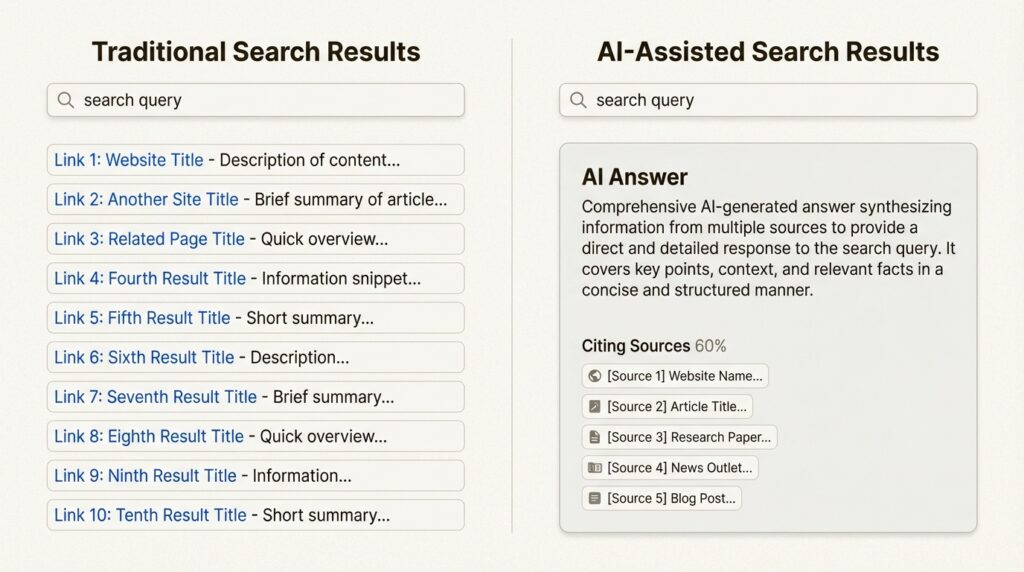
This doesn’t mean traditional SEO is dead. It means you need a dual-track approach.
What is Generative Engine Optimization (GEO)?
GEO is the practice of optimizing your content to be cited by AI systems like ChatGPT, Claude, and Perplexity. Unlike traditional SEO, which targets ranking positions, GEO targets inclusion in AI-generated responses.
How to optimize for AI search
Structure content for AI consumption:
- Use clear H2/H3 headings that match common questions
- Provide direct answers in the first 1-2 sentences of each section
- Use bullet points and numbered lists for scannability
- Include FAQ sections with clear question-answer pairs
Entity optimization:
AI systems need to understand who you are and what you do. Be explicit:
- State your practice areas clearly
- Mention specific case types you handle
- Include geographic modifiers
- Use consistent naming across all content
Citation-worthy content:
AI systems prefer content that includes:
- Statistics with sources
- Clear, actionable advice
- Comprehensive coverage of topics
- Minimal fluff or promotional language
For a deeper dive into AI search optimization, read our guide on how to get cited by LLMs. To track your firm’s visibility across AI platforms, our AI Visibility Tracker monitors how often your brand appears in ChatGPT and other AI responses.
Measuring SEO success for your law firm
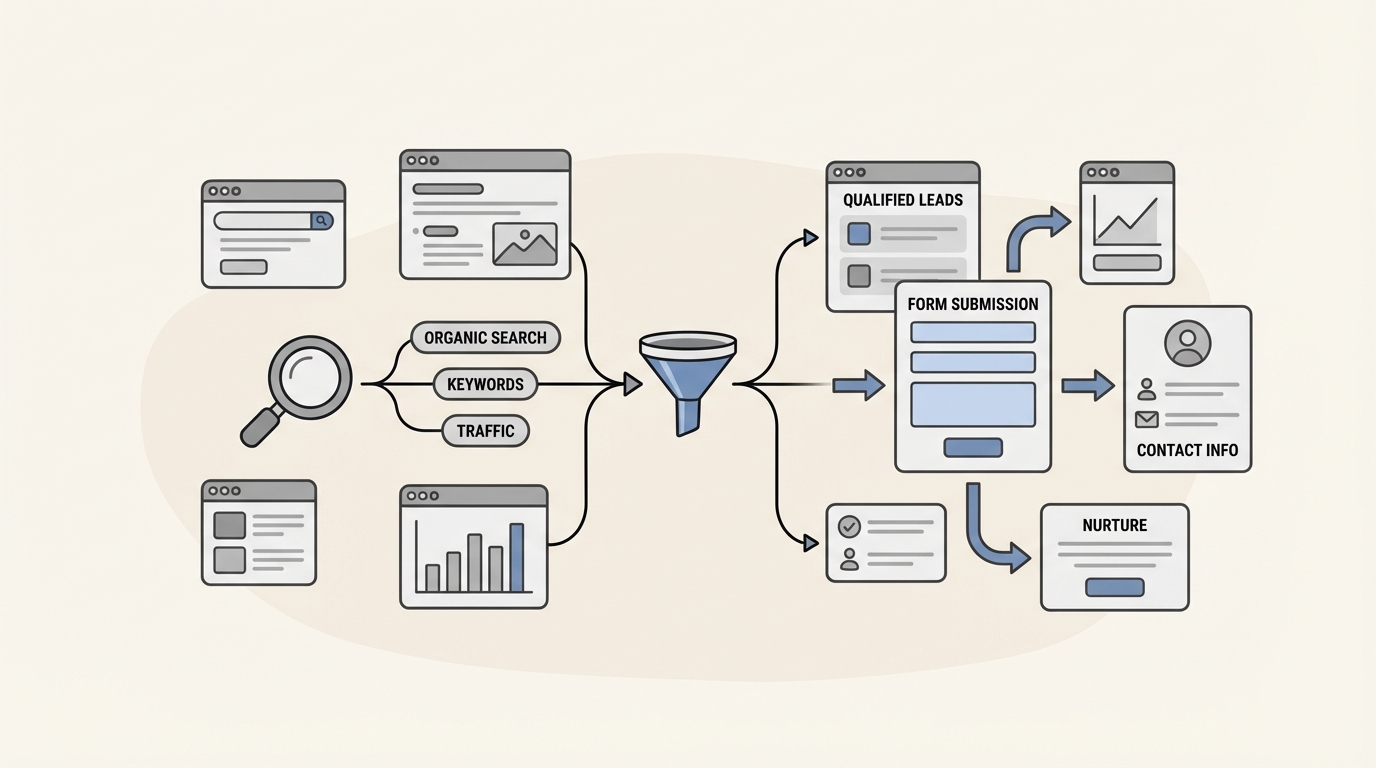
SEO for personal injury lawyers requires patience. Significant results typically take 6-12 months. But you should track progress from day one.
Key performance indicators
| Metric | Tool | What It Tells You |
|---|---|---|
| Organic traffic | Google Analytics 4 | Overall visibility growth |
| Keyword rankings | SEMrush or Ahrefs | Position changes for target terms |
| Local pack visibility | Local rank tracker | Map pack appearances |
| Phone calls | Call tracking software | Lead volume from organic search |
| Form submissions | GA4 Events | Consultation requests |
Call tracking is essential
Over 70% of personal injury leads come via phone. Without call tracking, you can’t attribute leads to SEO efforts. Implement dynamic number insertion (DNI) to show different phone numbers based on traffic source, allowing you to measure exactly how many calls SEO generates.
Realistic timeline expectations
| Phase | Timeline | Expected Results |
|---|---|---|
| Foundation | Months 1-3 | Technical fixes, GBP optimization, initial content |
| Momentum | Months 4-6 | Rankings improve for long-tail keywords, traffic increases 20-50% |
| Growth | Months 7-12 | First page for competitive terms, consistent lead flow |
| Authority | Year 2+ | Top 3 rankings for primary keywords, dominant local presence |
For ongoing monitoring, learn how to track AI visibility alongside traditional metrics.
Common SEO mistakes personal injury lawyers make
After auditing hundreds of law firm websites, we see the same mistakes repeatedly:
Targeting overly broad keywords: “Personal injury lawyer” is a trap. Focus on specific, high-intent terms.
Ignoring Google Business Profile: A neglected GBP is invisible in the local pack. Post updates, respond to reviews, and keep information current.
Inconsistent NAP information: Variations in your name, address, or phone number across directories confuse search engines and hurt rankings.
Generic, non-local content: Content that could apply to any lawyer in any city doesn’t rank. Make it specific to your market.
Expecting overnight results: SEO is a marathon, not a sprint. Firms that quit after three months waste their initial investment.
Using black-hat tactics: Buying links, keyword stuffing, or fake reviews will eventually result in penalties that are expensive to recover from.
Getting started with SEO for your personal injury practice
You have three options for implementing SEO:
DIY SEO: Possible if you have time to learn and execute consistently. You’ll need tools like SEMrush or Ahrefs ($99-$449/month), plus significant time investment for content creation and link building.
Hire an in-house marketer: A full-time SEO specialist costs $60,000-$100,000+ annually, plus tool subscriptions. This makes sense for larger firms with multiple practice areas.
Partner with an agency: Most personal injury firms benefit from working with a specialized legal marketing agency. Look for:
- Proven results with law firms (not just general SEO experience)
- Transparent reporting and communication
- Realistic timeline expectations
- Ethical, white-hat tactics only
Red flags when evaluating SEO providers
- Guarantees of #1 rankings (impossible to guarantee)
- Promises of results in 30 days (unrealistic for PI law)
- Secret or “proprietary” methods (likely black-hat)
- No reporting or vague metrics
- Pricing that’s too good to be true ($500/month for this niche)
Quick wins you can implement today
- Claim and verify your Google Business Profile
- Audit your NAP consistency across major directories
- Add click-to-call buttons to your mobile site
- Create a page for your most profitable practice area
- Request reviews from your last five satisfied clients
For firms ready to invest in comprehensive SEO, our GEO SEO audit identifies exactly what’s holding your site back and provides a prioritized roadmap for improvement. Our broader AI SEO services combine traditional search optimization with AI search visibility for maximum coverage.
Ready to improve your firm’s search visibility? Contact us for a free consultation and learn how Decoding’s custom SEO strategies can help your personal injury practice attract more qualified leads.
Frequently Asked Questions
How long does SEO for personal injury lawyers take to show results?
Most firms see measurable improvements within 4-6 months, but significant results typically require 6-12 months of consistent effort. Personal injury law is highly competitive, so patience and persistence are essential.
What makes SEO for personal injury lawyers different from other practice areas?
PI law has higher competition, higher case values, and more urgent client intent than most practice areas. Clients are often in crisis, so content must balance authority with empathy. The PPC costs are also among the highest of any industry, making organic SEO especially valuable.
Should personal injury lawyers focus on local SEO or national SEO?
Almost always local SEO. Personal injury clients need local representation for court appearances, depositions, and meetings. Focus on dominating your geographic market before considering broader targeting.
How much should a personal injury law firm budget for SEO?
Effective SEO for PI lawyers typically requires $2,000-$10,000+ per month depending on market competitiveness, current website state, and goals. Be wary of agencies charging less. The effort required to compete in this niche demands proper resources.
Can I do SEO for my personal injury law firm myself?
Yes, but it requires significant time investment to learn and execute properly. You’ll need to master technical SEO, content creation, link building, and local optimization. Most successful PI lawyers find their time is better spent on billable work while experts handle SEO.
How do I know if my SEO efforts are working?
Track organic traffic growth, keyword ranking improvements, local pack visibility, and most importantly, leads and consultations attributed to organic search. Call tracking is essential since most PI clients call rather than fill out forms.
What’s the biggest mistake personal injury lawyers make with SEO?
Targeting overly broad keywords like ‘personal injury lawyer’ instead of specific, high-intent terms like ‘car accident lawyer [city].’ The broad terms are nearly impossible to rank for and attract low-intent traffic. Specific keywords convert better and are more achievable.





Leave a Reply