

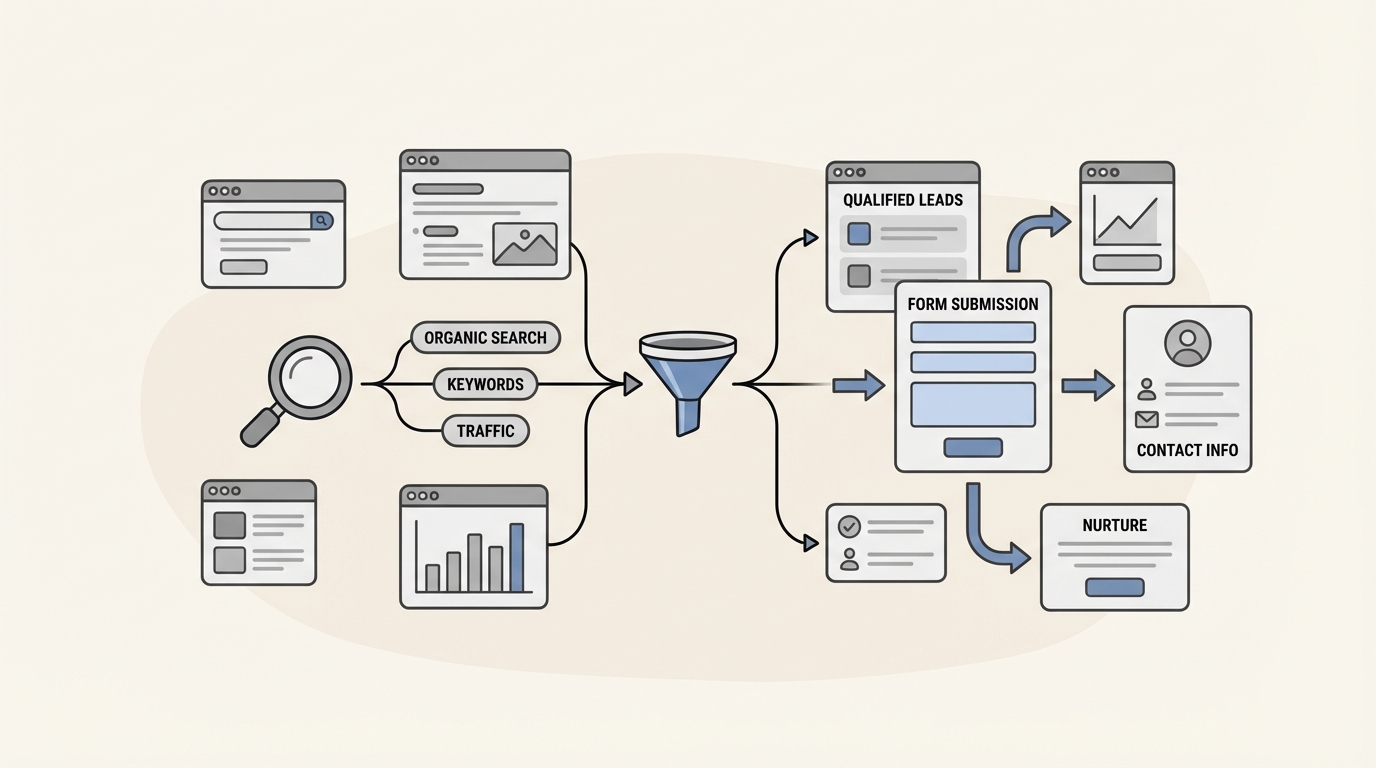
Here’s a statistic that should change how you think about your website: 96% of visitors aren’t ready to buy when they first land on your site. They’re researching, comparing, and evaluating options. The businesses that win aren’t the ones with the most traffic. They’re the ones that capture these early-stage researchers and nurture them into qualified leads.
That’s where SEO for lead generation comes in. Unlike general SEO that chases rankings and traffic metrics, lead generation SEO focuses on attracting the right people and converting them into prospects. It’s sustainable, cost-effective, and compounds over time. While your competitors burn budget on paid ads, a well-executed SEO strategy keeps working 24/7 without additional spend.
At Decoding, we’ve spent 16+ years helping businesses build lead generation engines through organic search. This guide breaks down the complete framework, from keyword strategy to conversion optimization, with actionable tactics you can implement immediately.
What is SEO for lead generation?
SEO for lead generation is the practice of optimizing your website to attract potential customers through organic search and convert them into qualified prospects. It differs from general SEO in one critical way: the focus is on conversion, not just traffic.
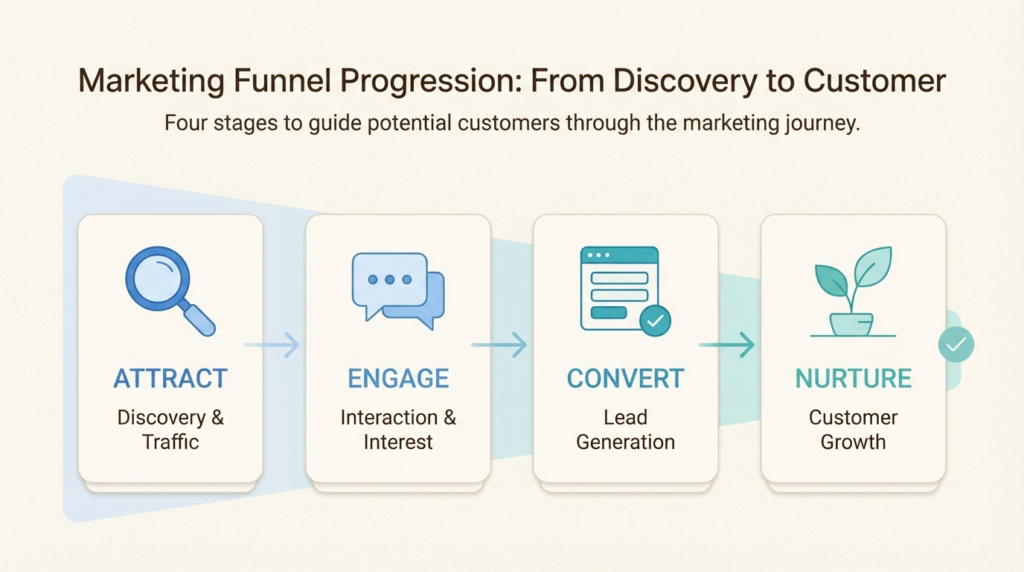
Think of it as a funnel with four stages:
- Attract: Get found by people searching for solutions you provide
- Engage: Deliver valuable content that builds trust and demonstrates expertise
- Convert: Capture contact information through strategic lead magnets and CTAs
- Nurture: Guide prospects through your sales process until they’re ready to buy
There are two approaches to generating leads through SEO. The direct method targets high-intent keywords where searchers are actively looking to hire, buy, or solve a problem. The indirect method uses content marketing, social media, and guest posting to build authority and drive qualified traffic back to your site.
Here’s what’s changing in 2026: traditional SEO alone isn’t enough. With the rise of AI search engines like ChatGPT, Perplexity, and Claude, lead generation now requires optimizing for both Google rankings AND AI citations. We call this unified approach SEO + GEO (Generative Engine Optimization), and it’s becoming essential for businesses that want to stay visible as search evolves.
Keyword strategy for SEO lead generation: targeting high-intent searches
The foundation of any lead generation SEO strategy is understanding what your prospects actually search for. Not what you think they search for. What they actually type into Google.
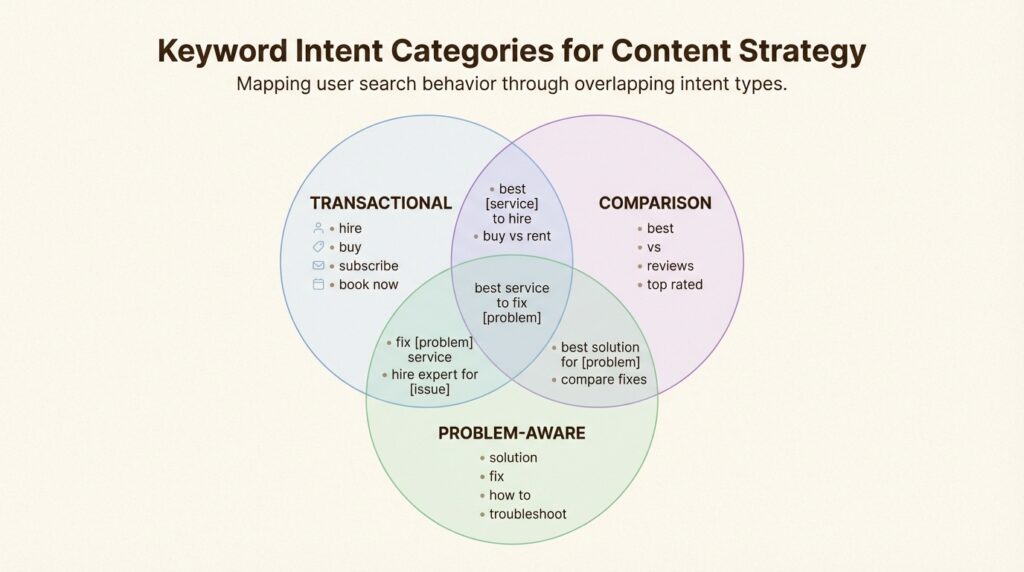
Commercial intent keywords fall into three categories:
- Transactional keywords signal immediate purchase intent: “hire SEO agency,” “buy CRM software,” “request demo”
- Comparison keywords indicate evaluation mode: “best email marketing tools,” “Salesforce vs HubSpot,” “top CRM for small business”
- Problem-aware keywords show someone seeking solutions: “reduce customer churn,” “improve website speed,” “fix broken backlinks”
The mistake most businesses make? Chasing high-volume keywords that attract unqualified traffic. A keyword like “CRM” might get 100,000 searches per month, but “CRM for real estate agents” with 500 searches will convert significantly better. As one agency noted, they wouldn’t target “press release” but would absolutely target “press release distribution” because the intent is unmistakable.
For B2B specifically, long-tail keywords are gold. Someone searching “enterprise marketing automation platform with Salesforce integration” knows exactly what they need. They’re not browsing. They’re buying.
Tools that help with this research include Ahrefs and Semrush for competitor analysis and keyword difficulty, Google Keyword Planner for search volume data, and AnswerThePublic for question-based queries. At Decoding, we also use our own content strategy frameworks to map keywords to buyer journey stages.
Content that converts: creating lead-generating assets
Keywords get you found. Content gets you leads. But not just any content. Content that demonstrates expertise, solves real problems, and guides visitors toward conversion.
Blog posts targeting bottom-of-funnel (BOFU) keywords are your workhorses. These comprehensive guides (think 2,000+ words) answer specific questions your prospects have when they’re close to making a decision. The data backs this up: BOFU content can convert at 8-10% because the search intent is so strong.
But blog posts alone won’t build your pipeline. You need lead magnets that capture contact information:
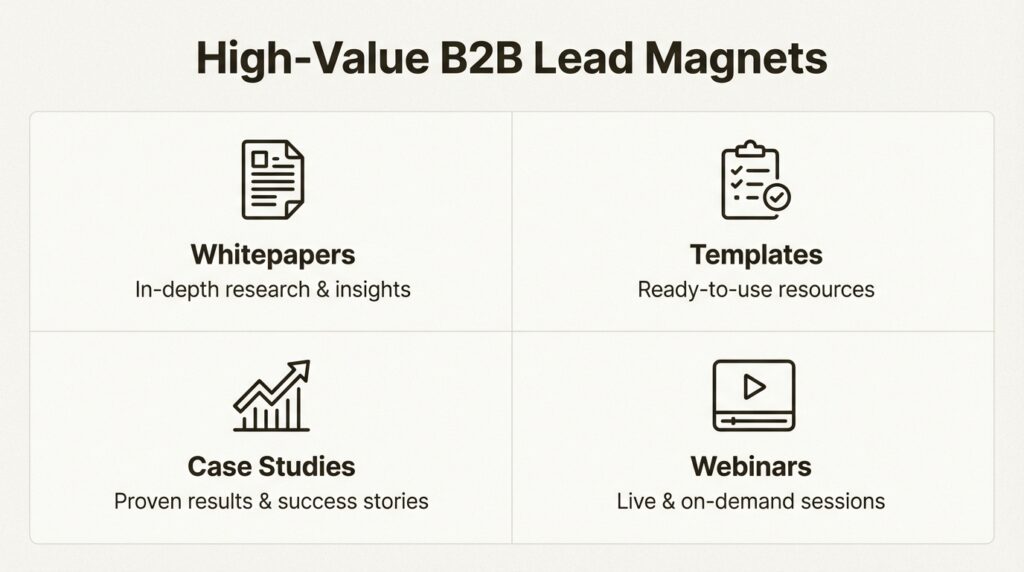
- Whitepapers and industry reports that provide original research
- Templates and calculators that solve immediate problems (budget calculators, editorial calendars, ROI worksheets)
- Case studies showing real results you’ve achieved for similar clients
- Webinars and video training that demonstrate expertise
Landing pages deserve special attention. Each major keyword cluster should have a dedicated page optimized for that specific search intent. The page needs a clear value proposition, social proof, and a single, prominent call-to-action. No navigation distractions. No competing offers. Just one clear next step.
Content formats that consistently generate leads include comparison posts (“Tool A vs Tool B”), “how-to” guides that demonstrate expertise, and case studies that prove you can deliver results. One agency reported that a single blog post comparing social media marketing costs has earned them over $1 million in business over the years.
Don’t forget to update existing content. Search rankings aren’t permanent. Refreshing older posts with new data, additional sections, and updated examples can push them back to the top of results. For more on optimizing content for modern search, see our guide on how to rank in Google AI Overviews.
Technical foundations for lead generation SEO
Even the best content won’t generate leads if your website is slow, broken, or frustrating to use. Technical SEO is your foundation. Without it, everything else suffers.
Page speed is non-negotiable. Google uses Core Web Vitals as ranking factors, and users abandon sites that take more than a few seconds to load. Use Google PageSpeed Insights to identify issues. Common fixes include compressing images, enabling browser caching, and minimizing JavaScript.
Mobile responsiveness isn’t optional anymore. The majority of B2B research happens on mobile devices during commutes, between meetings, or after hours. If your site doesn’t work perfectly on phones and tablets, you’re losing leads.
Site architecture matters for both search engines and users. Your most important pages should be accessible within three clicks from the homepage. Use clear, descriptive URLs. Implement breadcrumb navigation. Make it easy for visitors to find exactly what they’re looking for.
Schema markup helps search engines understand your content and can earn you rich snippets in results. For lead generation sites, this might include FAQ schema, review markup, or local business structured data. These enhanced listings get more clicks than standard results.
Internal linking serves two purposes. It helps search engines discover and understand your content hierarchy. It also keeps visitors on your site longer, increasing the chance they’ll convert. Link related blog posts to each other. Connect service pages to relevant case studies. Create content silos around your core topics.
Regular technical audits catch problems before they hurt rankings. Google Search Console will alert you to crawl errors and indexing issues. Tools like Screaming Frog can identify broken links, duplicate content, and missing meta descriptions. For comprehensive technical optimization, consider our technical SEO services.
Conversion optimization: turning visitors into leads
Traffic without conversion is just vanity metrics. The real work happens when you turn anonymous visitors into identifiable prospects.
Strategic CTAs (calls-to-action) guide visitors toward conversion. They should be specific, benefit-focused, and visually prominent. “Get Your Free SEO Audit” beats “Submit” every time. “Download the 2026 B2B Marketing Report” is better than “Click Here.” Place CTAs throughout your content, not just at the end. Some visitors are ready to convert immediately. Others need to read more first.
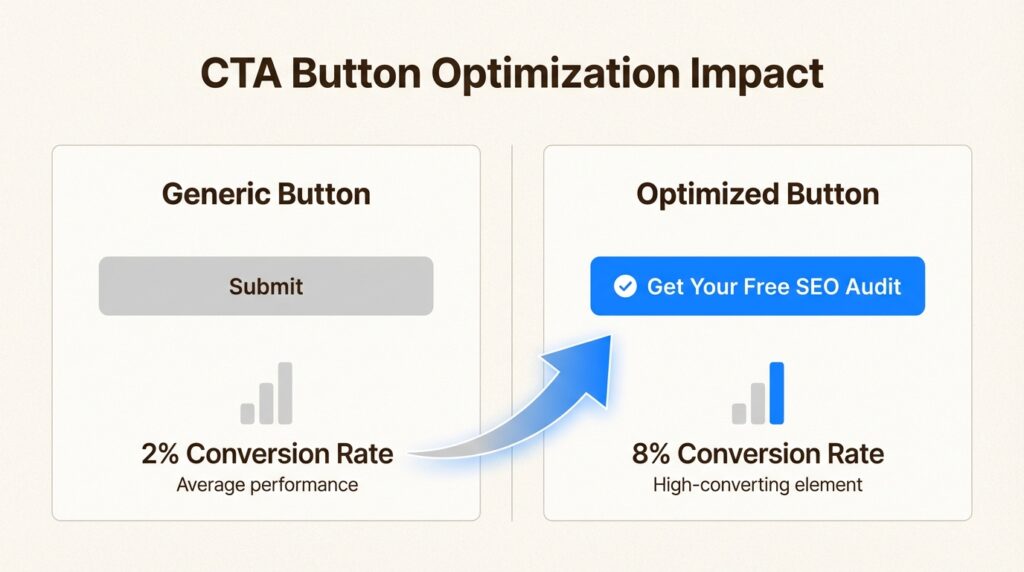
Lead capture forms require careful balance. You want enough information to qualify leads, but every additional field reduces conversion rates. Start with just email address for top-of-funnel content. Request more details (company size, role, budget) for high-value resources like consultations or custom reports.
Live chat and chatbots capture leads while they’re actively engaged. A visitor reading your pricing page at 10 PM might have questions that a chatbot can answer, then capture their email for follow-up. HubSpot offers a free CRM with chat functionality, and there are dozens of specialized tools for different use cases.
Social proof reduces friction in the conversion process. Testimonials from named customers (with photos and company details) are more credible than anonymous quotes. Case studies with specific metrics (“increased leads by 400%”) outperform vague success stories. Trust badges, security certifications, and industry awards all signal legitimacy.
A/B testing is essential for continuous improvement. Test different headlines, CTA button colors, form lengths, and page layouts. Small improvements compound over time. A 20% increase in conversion rate might mean doubling your qualified leads without any additional traffic.
CRM integration ensures no lead falls through the cracks. When someone fills out a form, their data should automatically flow into your CRM with appropriate tagging and lead scoring. This enables automated nurture sequences and helps sales prioritize the hottest prospects. Our AI brand visibility tracker can help you monitor which content and channels are driving your highest-quality leads.
Link building and authority building for SEO leads
Search engines use backlinks as votes of confidence. The more high-quality sites that link to yours, the more authority you have, and the better you’ll rank.
But not all links are equal. A single link from a major publication in your industry is worth more than dozens of links from low-quality directories. Focus on earning links from trusted sources that your prospects actually read.
HARO (Help a Reporter Out) is one of the most effective tactics for earning authoritative backlinks. Three times a day, HARO sends emails with queries from journalists looking for expert sources. Respond to relevant requests with thoughtful, quotable insights. When journalists use your input, they typically include a link back to your site. One agency reported earning $1.2 million worth of media coverage through HARO alone.
Guest posting on industry publications serves dual purposes. You get a backlink from an authoritative site, and you put your expertise in front of a qualified audience. The key is choosing publications your prospects actually read, not just any site that accepts guest posts.
Strategic partnerships and co-marketing can generate links and leads simultaneously. Co-create content with complementary businesses. Host joint webinars. Cross-promote each other’s resources. Both parties benefit from expanded reach and shared authority.
Internal linking distributes authority throughout your site. Your homepage and major service pages likely have the most backlinks. Use internal links to pass some of that authority to deeper pages like blog posts and case studies. This helps those pages rank for their target keywords.
When measuring backlink quality, look at domain authority (using tools like Moz or Ahrefs), relevance to your industry, and the context of the link. A link within relevant editorial content is worth far more than a link in a footer or sidebar. For help with systematic link building, explore our link building and digital PR services.
Measuring SEO lead generation success
You can’t optimize what you don’t measure. Effective SEO lead generation requires tracking the right metrics and connecting them to business outcomes.
Key metrics to monitor include:
- Organic traffic: How many visitors find you through search
- Conversion rate: What percentage take your desired action (form fills, downloads, calls)
- Cost per lead: Total SEO investment divided by leads generated (compare this to your paid acquisition costs)
- Lead quality score: Not all leads are equal. Track which sources produce prospects that actually become customers
Attribution is challenging because SEO touches multiple stages of the buyer journey. Someone might discover you through a blog post, return later via direct search, and finally convert after clicking a retargeting ad. Multi-touch attribution models give you a more accurate picture than last-click attribution.
Tools for measurement include Google Analytics 4 for traffic and behavior data, Google Search Console for search performance and query data, and your CRM for lead source tracking and revenue attribution. The key is connecting these systems so you can trace a lead from first touch through to closed deal.
Set up conversion tracking specifically for organic leads. Create goals in Google Analytics for form submissions, phone calls, and other key actions. Use UTM parameters when sharing content on social media or email so you can distinguish organic search traffic from other sources.
Reporting should demonstrate ROI in terms that matter to leadership. Traffic growth is nice, but revenue growth is what counts. Show how SEO investment compares to paid acquisition costs. Highlight lead quality differences between channels. For benchmark data and industry insights, check our SEO statistics and AI search research.
The future of SEO for lead generation: integrating GEO
Search is changing faster than ever. The strategies that worked in 2020 won’t be enough in 2026. Here’s what you need to know.
AI search engines like ChatGPT, Perplexity, and Claude are becoming primary research tools for B2B buyers. Instead of typing keywords into Google, prospects are asking AI assistants detailed questions and getting synthesized answers. If your business isn’t cited in those responses, you’re invisible to a growing segment of your market.
Traditional SEO alone isn’t enough anymore. You need a unified approach that optimizes for both Google rankings AND AI citations. This is where Generative Engine Optimization (GEO) comes in.
GEO strategies for lead generation include:
- Structured, quotable content: AI assistants pull from clearly structured content with definitive statements. Break up dense paragraphs. Use bullet points. Include specific statistics and data points.
- Comprehensive topic coverage: AI favors sources that thoroughly cover a topic. Surface-level content gets passed over for more authoritative sources.
- Entity optimization: Ensure your brand, products, and key personnel are clearly defined across your site and external sources like Wikipedia, Crunchbase, and industry directories.
- Citation-worthy assets: Publish original research, industry benchmarks, and definitive guides that AI assistants will reference when answering related questions.
The businesses that move first on GEO will have a significant advantage. Just as early SEO adopters dominated search results for years, early GEO adopters will become the default citations in AI-generated responses. For a complete framework on AI search optimization, read our guide to AI search optimization. And for specific tactics on earning AI citations, see how to get cited by LLMs.
Start generating leads with SEO today
SEO for lead generation isn’t a quick fix. It’s a compounding investment that pays dividends for years. The businesses that commit to it consistently outperform competitors who rely solely on paid acquisition.
The key takeaways:
- Focus on search intent, not just search volume. Target keywords that signal buying intent.
- Create comprehensive content that demonstrates expertise and guides visitors toward conversion.
- Build technical foundations that support both search visibility and user experience.
- Optimize every element of the conversion path, from first click to CRM entry.
- Earn authoritative backlinks that signal trust to both search engines and prospects.
- Measure what matters: lead quality and revenue, not just traffic and rankings.
- Prepare for the future by integrating GEO strategies alongside traditional SEO.
The competitive advantage goes to businesses that start now. While your competitors debate whether SEO is worth the investment, you could be building a lead generation engine that works 24/7.
At Decoding, we specialize in SEO + GEO strategies that drive qualified leads for B2B businesses. Our team brings 16+ years of experience plus proprietary tools for tracking AI visibility. If you’re ready to turn organic search into your most reliable lead source, let’s talk. You can also start with a free AI visibility audit to see how your brand appears across AI search engines.
Frequently Asked Questions
How long does it take to see results from SEO for lead generation?
Most businesses see initial traction within 3-6 months, with significant results typically appearing at 6-12 months. SEO compounds over time. The leads you generate in month 12 build on the work you did in months 1-6. Unlike paid ads, which stop working when you stop paying, SEO continues generating returns long after the initial investment.
What is the difference between SEO for lead generation and regular SEO?
Regular SEO focuses on rankings and traffic metrics. SEO for lead generation focuses on attracting qualified prospects and converting them into leads. The strategies overlap, but lead generation SEO places greater emphasis on commercial intent keywords, conversion optimization, and content that moves visitors through the buyer journey.
How much should I budget for SEO lead generation?
Budgets vary based on competition, current site state, and goals. Small businesses might start with $2,000-5,000 per month. Mid-market companies often invest $5,000-15,000 monthly. Enterprise SEO can exceed $20,000 per month. The key metric is cost per lead compared to other channels. SEO typically becomes the most cost-effective lead source once it matures.
Can I do SEO for lead generation myself, or do I need an agency?
You can handle basics like content creation and on-page optimization in-house. However, technical SEO, link building, and strategic planning often benefit from experienced help. Many businesses use a hybrid approach: handle content internally while outsourcing technical work and strategy. At Decoding, we offer flexible engagement models from one-time audits to full-service management.
How do I measure the quality of leads from SEO?
Track lead quality by connecting your CRM data to your analytics. Measure which organic keywords and pages produce leads that actually become customers. Calculate customer lifetime value by lead source. Compare sales cycle length for SEO leads versus other channels. Quality metrics matter more than quantity.
What role does AI search play in SEO for lead generation?
AI search is becoming a significant channel for B2B research. Prospects use ChatGPT, Perplexity, and similar tools to research solutions before ever visiting Google. Optimizing for AI citations (GEO) ensures your business appears in these conversations. This requires structured content, comprehensive topic coverage, and entity optimization alongside traditional SEO tactics.
Should I focus on SEO or paid ads for lead generation?
The most effective strategy uses both. Paid ads deliver immediate leads while you build SEO momentum. SEO provides sustainable, cost-effective leads over the long term. Most successful B2B companies run both channels, with the balance shifting toward organic as their SEO matures. SEO leads typically have higher close rates and lower customer acquisition costs than paid leads.










Leave a Reply